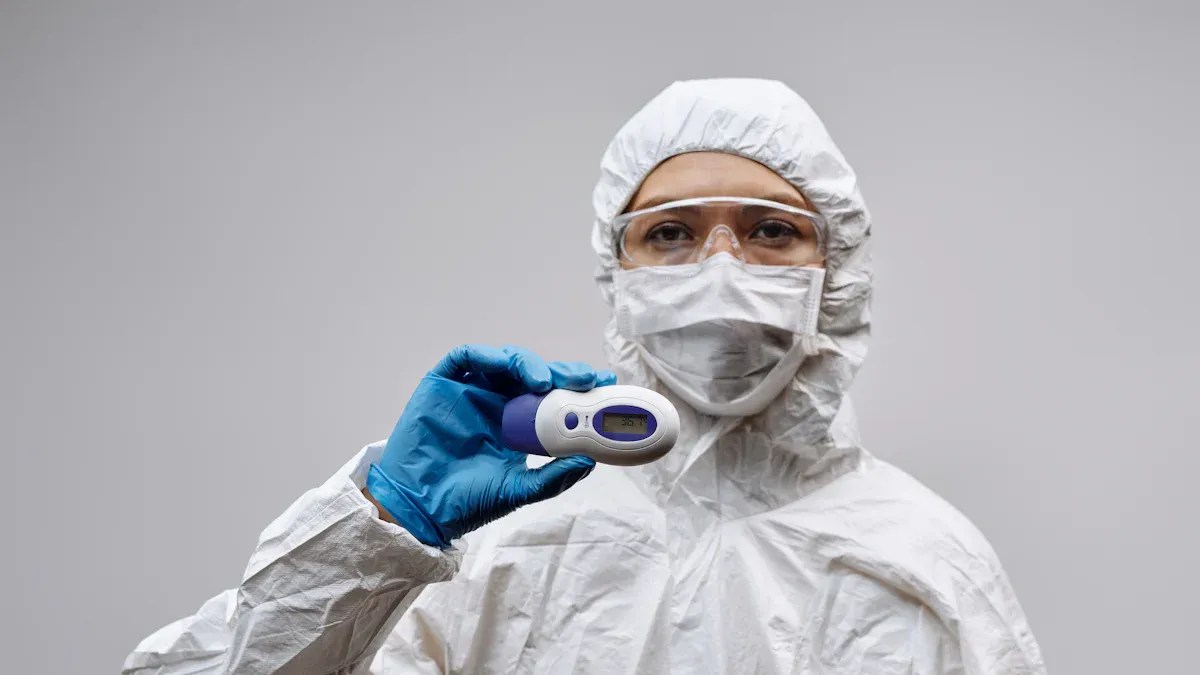
In oncology, ‘Beyond Borders: Adapting to Global USP 800 PPE Trends in Oncology’ is crucial for enhancing safety. The handling of hazardous drugs poses significant risks to healthcare workers and patients alike. Workplace exposure can occur at various stages, including manufacturing, compounding, and administration. With over 270 licensed anticancer drugs and millions of chemotherapy doses administered annually, the potential for exposure remains high. Implementing USP <800> guidelines establishes enforceable standards that protect both staff and patients, ensuring that safety remains a top priority in oncology practices worldwide.
Remember, your commitment to these standards not only safeguards your health but also enhances patient care.
Key Takeaways
-
Implement standard operating procedures (SOPs) for using personal protective equipment (PPE) to enhance safety in oncology.
-
Use specific PPE like gloves, gowns, and eye protection when handling hazardous drugs to minimize exposure risks.
-
Conduct annual risk assessments to identify hazardous drugs and ensure the safety of healthcare workers.
-
Stay informed about global trends and regulatory changes in PPE to adapt practices effectively.
-
Prioritize ongoing education and training to maintain compliance with USP <800> standards and improve patient care.
USP 800 Overview
Define USP 800 and its relevance to oncology
USP <800> was published by the United States Pharmacopeial Convention in 2016. This chapter aims to mitigate risks associated with hazardous drug handling in healthcare settings. It provides standardized guidelines that safeguard both patients and healthcare professionals. The relevance of USP <800> in oncology is particularly significant due to the nature of the drugs involved. Oncology practices often handle a variety of hazardous drugs, which can pose serious health risks if not managed properly.
Key points about USP <800> include:
-
It identifies hazardous drugs and potential exposure risks, which are crucial for oncology practices.
-
It emphasizes the need for infrastructure changes, such as installing negative pressure rooms and anterooms.
-
It mandates specific protocols for the delivery, unpacking, and movement of hazardous drugs.
Discuss the guidelines for handling hazardous drugs
The guidelines outlined in USP <800> are essential for ensuring the safe handling of hazardous drugs in oncology. Sections 8, 9, and 10 of USP <800> provide critical guidance on this matter.
-
Section 8 requires the establishment of safety policies. These policies include training on labeling and the use of Safety Data Sheets.
-
Section 9 mandates that personnel handling hazardous drugs must be fully trained and demonstrate competency, with regular reassessments.
-
Section 10 specifies that hazardous drugs must be received sealed, and personal protective equipment (PPE) must be worn during handling.
The guidelines emphasize the necessity of using personal protective equipment such as chemotherapy-tested gloves and gowns when handling hazardous drugs. Additionally, they mandate the implementation of engineering controls like hoods and closed-system transfer devices during drug preparation. Comprehensive policies and procedures must also be established to manage all aspects of hazardous drug handling, from receipt and storage to waste disposal.
By adhering to these guidelines, you can significantly reduce the risks associated with hazardous drug exposure in oncology settings. Dr. Polovich highlights that USP <800> introduces mandatory standards for the protection of healthcare workers, marking a significant step toward reducing exposure. However, the effectiveness of these guidelines can vary based on how organizations implement safety practices.
Remember, your commitment to following these guidelines not only protects your health but also enhances the safety of your patients.
Global PPE Trends

Innovations in PPE
Recent advancements in personal protective equipment (PPE) technology have significantly enhanced safety for healthcare workers in oncology. You can now find smart PPE that integrates sensors to monitor exposure levels in real-time. This innovation allows you to receive immediate alerts if hazardous conditions arise, ensuring timely action to mitigate risks. Additionally, manufacturers are developing lighter, more breathable materials that maintain protective qualities while improving comfort during long shifts.
Another exciting trend is the use of antimicrobial coatings on PPE. These coatings help reduce the risk of contamination, providing an extra layer of protection against occupational exposure to hazardous drugs. As you navigate the complexities of oncology, these innovations can help you maintain a safer working environment.
Regulatory Changes
Regulatory changes have played a crucial role in shaping PPE standards in oncology. The introduction of the United States Pharmacopeia chapter 800 (USP 800) established enforceable guidelines for handling hazardous drugs. This chapter, effective since December 2019, includes requirements for personnel training, facility design, and engineering controls. Here are some significant regulatory changes affecting PPE use in oncology:
-
The emphasis on clear regulations encourages prioritization of elimination and engineering controls over PPE.
-
Strong enforcement of policies leads to improved worker health outcomes and reduced carcinogen exposure.
-
The adoption of smart PPE is driven by regulatory demands for enhanced safety and compliance in oncology settings.
|
Regulatory Change |
Impact on PPE Standards |
|---|---|
|
Emphasis on clear regulations |
Encourages prioritization of elimination and engineering controls over PPE |
|
Strong enforcement of policies |
Leads to improved worker health outcomes and reduced carcinogen exposure |
|
Adoption of smart PPE |
Driven by regulatory demands for enhanced safety and compliance in oncology settings |
These changes not only enhance your safety but also contribute to better patient outcomes. Staying informed about these trends will help you adapt your practices to meet evolving standards in oncology.
Regional Adaptations
North America
In North America, oncology facilities are adapting to USP 800 standards by implementing stringent PPE requirements. You will find that the use of gloves, gowns, and eye protection during hazardous drug handling is now standard practice. A study highlighted that 28% of workers had measurable contamination, underscoring the necessity for effective PPE. Recommendations from ASHP and NIOSH emphasize the use of coated gowns and double gloves to prevent contamination transfer. These measures are critical for compliance with USP 800 and significantly reduce the risk of occupational exposure.
“Implementing these recommendations not only protects healthcare workers but also enhances patient safety.”
Europe
European oncology practices exhibit a diverse approach to USP 800 compliance. The table below summarizes how different countries manage closed-system transfer devices (CSTDs) and compliance measurement methods:
|
Region |
Approach to CSTDs |
Compliance Measurement Method |
|---|---|---|
|
UK |
Recommends CSTDs |
Not specified in the evidence |
|
Denmark |
Does not use CSTDs |
Environmental swab sampling every two years |
|
United States |
Enforced in many states |
Not specified in the evidence |
In the UK, the recommendation for CSTDs reflects a proactive stance toward minimizing exposure. Meanwhile, Denmark’s approach, which does not utilize CSTDs, relies on environmental monitoring to ensure safety. This variation highlights the importance of adapting strategies based on regional needs and resources.
Asia-Pacific
In the Asia-Pacific region, countries are increasingly recognizing the importance of adhering to USP 800 standards. For instance, Australia has implemented comprehensive training programs for healthcare workers handling cytotoxic drugs. These programs focus on the correct use of PPE and the importance of following safety protocols. In Japan, hospitals have begun investing in advanced engineering controls, such as negative pressure rooms, to further mitigate risks associated with hazardous drug exposure.
These adaptations demonstrate a commitment to enhancing safety and compliance across the region, ensuring that healthcare workers are well-equipped to handle hazardous drugs effectively.
Best Practices for Safe Handling

Training and Education
Effective training and education are vital for ensuring the safe handling of hazardous drugs in oncology. You must prioritize comprehensive training programs that equip healthcare workers with the necessary knowledge and skills. Consider implementing the following components in your training regimen:
|
Description |
|
|---|---|
|
Didactic Training |
Foundational training covering safe handling, risks, and regulations related to hazardous drugs. |
|
Hands-on Workshops |
Practical training in a simulated environment to practice hazardous drug compounding techniques. |
|
Assessments |
Evaluation of skills in aseptic technique and hazardous drug containment to ensure competency. |
Ongoing education significantly impacts compliance with USP 800 PPE guidelines. The USP 800 rule mandates that training on safe work practices and PPE use is essential for compliance. Regularly updating your staff’s knowledge about safe handling practices helps reduce the risk of occupational exposure. Institutions must have an occupational safety plan that includes training personnel on the proper use of PPE. This ongoing education fosters a culture of safety and accountability among healthcare workers.
Compliance Strategies
To effectively implement USP 800 standards, you need robust compliance strategies. Here are some proven approaches that can enhance your oncology department’s adherence to these guidelines:
-
Understand regulatory requirements and updates to USP standards.
-
Implement training and competency validation for personnel involved in preparing compounded sterile preparations (CSPs).
-
Establish standard operating procedures (SOPs) for the disinfection and reuse of PPE.
-
Increase the frequency of surface and personnel competency testing.
-
Designate a responsible individual for oversight of training and operations.
By adopting these strategies, you can create a safer environment for handling hazardous drugs. Regular assessments and updates to your compliance measures ensure that your practices remain effective and aligned with current regulations. Remember, the goal is to minimize risks associated with hazardous drug exposure while maintaining high standards of patient care.
Prioritize the safe handling of hazardous drugs to protect both healthcare workers and patients.
Challenges and Solutions
Barriers to Adaptation
Adapting to USP 800 standards presents several challenges in oncology practices. You may encounter the following barriers:
-
Insufficient Education: Many nurses report a lack of education regarding the risks associated with hazardous drugs. This gap can lead to unsafe practices.
-
Inconsistent Compliance: There is often inconsistency in PPE usage among nurses, which can compromise safety.
-
Patient Relationships: Concerns about how PPE affects interactions with patients can deter proper usage.
-
Time Constraints: Nurses frequently feel they lack the time necessary to don PPE correctly, increasing the risk of exposure.
In low- and middle-income countries (LMICs), additional challenges arise. Limited availability of disposable PPE impacts the adoption of USP 800 standards. While local production of PPE, such as cloth gowns, is feasible, it must consider costs and available materials. Furthermore, safe reprocessing of PPE, especially N95 respirators, poses significant challenges due to resource limitations and quality concerns.
Effective Solutions
To overcome these barriers, consider implementing the following solutions:
-
Enhanced Training Programs: Develop comprehensive training that emphasizes the importance of PPE and safe handling practices for hazardous drugs.
-
Standard Operating Procedures (SOPs): Establish clear SOPs for PPE usage and ensure all staff are familiar with them.
-
International Collaboration: Engage in partnerships to share best practices. For example, using engineering controls like biologic safety cabinets can prevent aerosol drug exposure during preparation.
|
Best Practices |
Description |
|---|---|
|
Engineering Controls |
Use of biologic safety cabinets and closed-system drug-product transfer devices to prevent aerosol drug exposure during preparation. |
|
Procedural Controls |
Safe handling practices intended to minimize the generation of drug aerosol. |
|
PPE Usage |
Consistent use of respirators, gloves, gowns, and other barrier protection during hazardous drug handling. |
|
Environmental Exposure Assessment |
Periodic assessment every 6 months using wipe-sampling techniques to measure hazardous drug residues in workspaces. |
By addressing these challenges with effective solutions, you can enhance safety and compliance in your oncology practice.
Staying informed about global trends in USP 800 PPE is essential for your safety and the safety of your patients in oncology. Key takeaways include:
-
USP <800> emphasizes developing standard operating protocols (SOPs) for PPE use.
-
Specific PPE requirements include gloves, gowns, and head covers when compounding hazardous drugs.
-
Annual risk assessments are crucial to identify hazardous drugs and protect healthcare workers.
As you navigate the complexities of oncology, remember that ongoing education and awareness can significantly reduce risks associated with hazardous drug exposure. Embrace these standards to enhance safety and improve patient care.
Your commitment to these practices not only safeguards your health but also contributes to better outcomes for patients facing cancer.
FAQ
What is USP <800>?
USP <800> provides guidelines for handling hazardous drugs in healthcare settings. It aims to protect healthcare workers and patients from exposure risks associated with these drugs.
Why is PPE important in oncology?
PPE is crucial in oncology to prevent exposure to hazardous drugs. Proper use of PPE safeguards healthcare workers’ health and enhances patient safety during drug handling.
How often should training on hazardous drug handling occur?
You should conduct training on hazardous drug handling at least annually. Regular training ensures that staff remain informed about best practices and compliance with USP <800> standards.
What types of PPE are recommended for handling hazardous drugs?
Recommended PPE includes chemotherapy-tested gloves, gowns, eye protection, and respiratory protection. These items help minimize exposure risks during the handling of hazardous drugs.
How can I ensure compliance with USP <800>?
To ensure compliance, implement standard operating procedures, provide regular training, and conduct assessments. Staying updated on regulatory changes also helps maintain adherence to USP <800> standards.