


In oncology settings, it is crucial to prioritize compliance with USP 800 standards to protect both patients and healthcare workers. Understanding how to ensure oncology safety with USP 800 compliant oncology PPE is vital, as hazardous drugs pose serious risks. Exposure can lead to adverse health effects, such as mutagenic, teratogenic, and carcinogenic impacts.
A survey revealed that over 7.3 million nurses in Europe face exposure to these drugs annually. Alarmingly, 55% of tested nurses showed traces of cytotoxic substances.
Implementing stringent safety measures, including the use of compliant oncology PPE, is essential for minimizing these risks and ensuring a safe environment.
Key Takeaways
-
Prioritize compliance with USP 800 standards to protect patients and healthcare workers from hazardous drug exposure.
-
Maintain an accurate hazardous drug list and review it at least once a year to ensure safety and compliance.
-
Use appropriate personal protective equipment (PPE) to minimize exposure risks when handling hazardous drugs.
-
Conduct regular risk assessments to identify potential hazards and implement effective control measures.
-
Participate in ongoing training to stay informed about safety protocols and improve adherence to PPE guidelines.
USP 800 Overview
USP 800 standards focus on the safe handling of hazardous drugs in healthcare settings. Developed by the United States Pharmacopeia (USP), these standards provide guidelines that protect both patients and healthcare workers from the risks associated with exposure to these drugs. To put it in perspective, while the well-known USP 797 standards focus purely on keeping compounded sterile preparations free from contamination, USP 800 pivots to focus squarely on keeping the worker safe from the medicine itself.
You must understand that hazardous drugs—particularly antineoplastic drugs (cancer-fighting therapies) and cytotoxic drugs (cell-killing agents)—can cause serious health issues, including cancer and reproductive harm. National organizations like the National Institute for Occupational Safety and Health (NIOSH) and the Occupational Safety & Health Administration (OSHA) play pivotal roles in regulating these substances. Adhering to the guidelines set by these regulatory agencies and professional groups like the Oncology Nursing Society is the backbone of protecting our frontline healthcare workers.
In oncology, the relevance of USP 800 standards cannot be overstated. These standards outline critical components for safe practices, including:
-
Facility and Engineering Controls: You need to ensure that your workspace has the right equipment to minimize exposure. This includes proper ventilation systems and designated areas for handling hazardous drugs.
-
Personnel Training: Job-specific training is essential. You should be well-informed about hazardous drugs, how they can enter your body, and the precautions you must take.
-
Safe Work Practices: Following established protocols helps reduce the risk of exposure. This includes proper disposal methods and maintaining cleanliness in work areas.
-
Personal Protective Equipment (PPE): Wearing appropriate PPE is crucial. This gear protects you from direct contact with hazardous substances.
Additionally, USP 800 mandates the use of closed system transfer devices (CSTDs). These devices help minimize the risk of spills and surface contamination, which are significant concerns in oncology settings. By adhering to these standards, you contribute to a safer environment for everyone involved in cancer care.
Understanding and implementing USP 800 standards is vital for maintaining safety in oncology. You play a key role in ensuring compliance and protecting both yourself and your patients.
Hazardous Drug Identification

Identifying hazardous drugs is a critical step in ensuring safety in oncology settings. You must understand the criteria for classification and maintain an accurate hazardous drug list to comply with USP 800 standards.
Criteria for Classification
To classify a drug as hazardous, you should consider several key factors:
-
Toxicity: Drugs that can cause significant harm, including cancer or reproductive issues, fall into this category.
-
Reproductive Effects: Any drug that poses risks to reproductive health, such as teratogenic effects, is classified as hazardous.
-
Organ Toxicity: Drugs that can damage specific organs, like the liver or kidneys, are also considered hazardous.
-
Genotoxicity: If a drug can alter genetic material, it qualifies as hazardous.
By evaluating these criteria, you can effectively identify hazardous drugs and take necessary precautions. Beyond just looking at the label, facilities must routinely consult safety data sheets, pay attention to official hazard warnings, and review the latest laboratory testing data. Some advanced facilities even test for specific marker drugs to evaluate potential environmental exposure risks.
Maintaining a Hazardous Drug List
Maintaining an up-to-date hazardous drug list is essential for compliance with USP 800. You should review and update this list at least once every 12 months. This process ensures that you account for any new drugs or changes in drug classifications.
Here are some tips for maintaining your hazardous drug list:
-
Regular Reviews: Schedule systematic reviews of your list to ensure it reflects current standards and practices. Always keep track of the expiration date of your inventory to prevent accidental exposure to unstable, degraded compounds.
-
Staff Considerations: When assigning personnel to handle these substances, it is vital to consider a worker’s reproductive history and current family-planning status to minimize severe occupational risks.
-
Collaboration: Work with pharmacists and other healthcare professionals to gather insights on new drugs and their classifications.
-
Documentation: Keep thorough records of any changes made to the list, including the reasons for updates.
By following these guidelines, you can help ensure that your oncology department remains compliant and safe for both patients and staff.
Remember, maintaining an accurate hazardous drug list is not just a regulatory requirement; it is a vital part of protecting everyone involved in cancer care.
Risk Assessment Strategies
Conducting risk assessments is essential for ensuring safety in oncology settings. You must evaluate potential hazards associated with hazardous drugs. This process helps you identify risks and implement effective control measures.
Conducting Effective Assessments
To conduct effective assessments, follow these steps:
-
Identify Hazards: Start by identifying all hazardous drugs in your facility. Review your hazardous drug list regularly.
-
Evaluate Exposure Risks: Assess how staff may come into contact with these drugs. Consider factors like handling, administration, and disposal.
-
Determine Control Measures: Identify existing safety measures. Evaluate their effectiveness and determine if additional controls are necessary.
-
Document Findings: Keep thorough records of your assessments. This documentation helps track changes and improvements over time. Furthermore, rigorous internal audits and environmental wipe sampling should be integrated directly into your facility’s broader quality management programs to catch invisible contamination.
Utilizing Risk Assessment Tools
You can enhance your risk assessment process by utilizing various tools. These tools help streamline evaluations and improve accuracy. Here are some effective options:
-
-
Checklists: Use checklists to ensure you cover all necessary aspects during assessments. They help maintain consistency and thoroughness. Excellent regulatory frameworks and templates can be found through U.S. state boards of pharmacy, as well as international bodies like Ontario Health, the Canadian Society of Hospital Pharmacists, and NAPRA.
-
Software Solutions: Consider using specialized software designed for risk assessments. These programs can automate data collection and analysis.
-
Training Programs: Implement training programs that focus on risk assessment techniques. Educating your staff empowers them to recognize and mitigate risks effectively.
-
By leveraging these tools, you can improve your risk assessment strategies and ensure compliance with USP 800 standards.
How to Ensure Oncology Safety with USP 800 Compliant Oncology PPE?

Ensuring oncology safety requires strict adherence to personal protective equipment (PPE) requirements. You must equip yourself with the right gear to minimize exposure to hazardous drugs. USP 800 outlines specific PPE mandates that you should follow.
Personal Protective Equipment Requirements
To achieve true USP 800 PPE Compliance, standard hospital gear won’t cut it. The following table summarizes the PPE types mandated by USP 800:
|
PPE Type |
Requirement |
|---|---|
|
Chemotherapy-tested gloves |
Double gloving for all tasks |
|
Double shoe covers |
2 pairs per USP <800> |
|
Chemical-resistant gloves |
Double gloving |
|
Elastomeric half-mask |
With multi-gas cartridge |
In addition to the basics, disposable gowns must be specifically tested to meet strict ASTM standards to resist chemical penetration. Eye protection must meet CSA Standard Z94.3-07 guidelines. Furthermore, enforcing double gloves is absolutely mandatory during compounding and administration.
Studies show that when you wear PPE properly, it effectively protects you from harmful substances. However, compliance with PPE guidelines remains a challenge. Callahan et al. (2016) found that adherence among healthcare workers is often suboptimal.
To ensure you are fully protected, remember to:
-
Inspect your PPE before each use.
-
Replace damaged items immediately.
-
Follow proper donning and doffing procedures to avoid contamination.
Training for Safe Handling
Training plays a crucial role in ensuring safe handling of hazardous drugs. You must understand how to use PPE effectively and recognize the risks associated with hazardous drug exposure. Here are some common challenges faced during PPE training:
-
Adherence to PPE guidelines among infusion nurses is reported to be as low as 50%. Recent data and clinical observations out of Georgia State University and Ann Arbor have highlighted the ongoing struggle to maintain high PPE compliance among frontline staff.
-
Many nurses feel uncomfortable or too hot while using PPE, affecting their compliance.
To improve training effectiveness, consider these strategies:
-
-
Continuous education: Training sessions must be frequent. These training programs shouldn’t just be for pharmacists; they must include training for nursing assistants and environmental service workers. Curriculums must rigorously cover Standard Precautions, Transmission-Based Precautions, infection control, and the CDC Guideline for Isolation Precautions.
-
Organizational support: Your workplace should provide resources and encouragement to follow safety measures.
-
Awareness of risks: Understanding the dangers of drug exposure is critical for improving PPE use.
-
There is an urgent need for new training programs focused on chemotherapy safety for nurses and pharmacists. By enhancing your knowledge and skills, you can contribute to a safer oncology environment.
By prioritizing PPE requirements and effective training, you can significantly enhance oncology safety in compliance with USP 800 standards.
Containment and Safety Protocols
Engineering Controls
Implementing effective engineering controls is essential for minimizing exposure. Here are key components to consider:
-
-
Containment Primary Engineering Control (C-PECs): This is your first line of defense. Facilities typically utilize a specialized Biological Safety Cabinet (biosafety cabinets / biosafety cabinetry)—specifically a class II type B BSC—or Compounding Aseptic Containment Isolators. These ventilated cabinets must be equipped with a high-efficiency particulate air filter (HEPA filters) to scrub dangerous aerosols out of the workspace.
-
Containment Secondary Engineering Control (C-SEC): This refers to the room surrounding the C-PEC, such as a containment segregated compounding area. A C-SEC must meet strict ventilation requirements, dictating specific air changes hourly. Unlike a standard sterile clean room that uses positive pressure to keep contaminants out and maintain sterility, a C-SEC must utilize negative pressure (negative-pressure rooms). This ensures that if a spill occurs, the toxic air is pulled inward and filtered, rather than escaping into the hallway.
-
Closed-System Transfer Devices: Finally, when performing liquid drug reconstitution, staff are mandated to use a closed-system transfer device (CSTD) (also known as closed-system drug-transfer devices).
-
Despite these controls, surface contamination remains a significant issue. Studies indicate that contamination levels have not significantly decreased over the past decade. While biological safety cabinets (BSCs) and closed-system drug transfer devices (CSTDs) help, they do not fully eliminate worker exposure. Therefore, you must remain vigilant and regularly assess the effectiveness of these engineering controls.
Hazard Communication
Effective hazard communication is vital for ensuring safety in oncology departments. USP 800 outlines several key elements that you must implement:
|
Key Element |
Description |
|---|---|
|
Create a program to inform staff about hazardous materials, including safety data sheets. |
|
|
Right-to-Know Document |
This document informs individuals about their risks related to hazardous materials. |
|
Medical Surveillance of Staff |
Conduct ongoing medical assessments to monitor staff exposure to hazardous drugs. |
To maintain compliance, you should conduct hazard communication training before staff begin working with hazardous drugs. Reassess this training at least once every 12 months. Additionally, provide training whenever new hazardous drugs are introduced or when there are changes in hazard information.
Safe Handling, Transport & Disposal Practices
Even with top-tier engineering controls, the physical movement and administration of these drugs carry high risks.
-
Transport: Never use pneumatic tubes to transport liquid hazardous drugs. The high-speed transit could cause a vial to shatter, resulting in a catastrophic, facility-wide contamination event.
-
Handling and Administration: When bedside staff use syringes, administer drugs through central venous catheters, or perform routine heparin flushes, extreme care must be taken. Proper handling mitigates the risks of both bloodborne pathogens and unexpected airborne transmission from microscopic drug droplets.
-
Cleaning and Disposal: After completing a task, thorough hand hygiene is non-negotiable. Work surfaces must undergo immediate decontamination using an EPA registered disinfectant designed for clinical spaces. For disposal, all sharps and used vials must be placed directly into a rigid waste container designated strictly for hazardous waste (and autoclaved if your local regulations require it prior to final disposal). Finally, every unit must have a fully stocked spill kit instantly accessible for emergencies.
By prioritizing containment and effective hazard communication, you can significantly enhance safety in your oncology department. Remember, staying informed and compliant with USP 800 standards is crucial for protecting both yourself and your patients.
In summary, effective USP 800 compliance strategies are vital for ensuring safety in oncology settings. You must focus on several key areas:
-
Hazardous Drug Identification: Maintain an accurate list of hazardous drugs.
-
Risk Assessment: Regularly evaluate potential hazards and implement control measures.
-
PPE and Training: Equip yourself with proper PPE and participate in ongoing training.
In summary, effective USP 800 compliance strategies are vital for ensuring safety in oncology settings. Regulatory agencies like the FDA and state pharmacy boards play a crucial role in enforcing these standards. By prioritizing safety, you contribute to a healthier environment for both patients and healthcare workers.
Tip: Regularly review your compliance strategies and involve your team in discussions about safety improvements.
FAQ
What is USP 800?
USP 800 sets standards for the safe handling of hazardous drugs in healthcare settings. It aims to protect both patients and healthcare workers from exposure risks associated with these drugs.
Why is PPE important in oncology?
Personal Protective Equipment (PPE) is crucial in oncology to minimize exposure to hazardous drugs. Proper use of PPE protects you from harmful substances during drug preparation and administration.
How often should I review the hazardous drug list?
You should review your hazardous drug list at least once every 12 months. Regular updates ensure that you account for new drugs and changes in classifications.
What are engineering controls?
Engineering controls include systems like containment primary engineering controls (C-PEC) and negative-pressure rooms. These systems help minimize exposure to hazardous drugs by maintaining safe environments during drug handling.
How can I improve my training on hazardous drug handling?
You can enhance your training by participating in regular educational sessions, utilizing resources provided by your organization, and staying informed about the latest safety protocols and best practices.
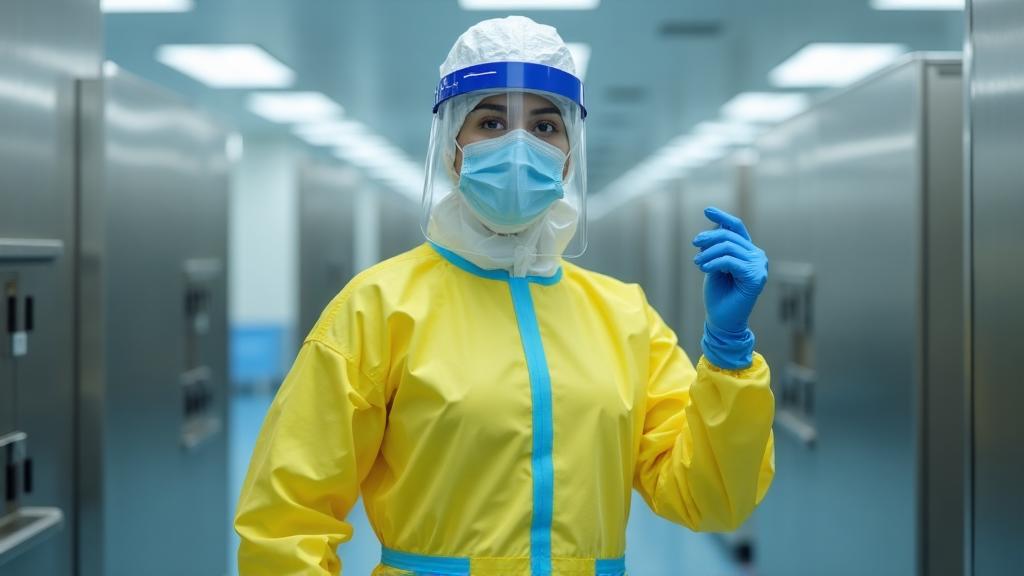
Head-to-Toe Zero-Gap Protection
Complete PPE integration for CSSD decontamination workflows


