


Microporous films play a crucial role in blocking invisible nanoscale pathogens. Specifically, how does a microporous film Level 4 gown block invisible nanoscale pathogens? These films create a barrier that protects you from harmful substances like bacteria and bodily fluids. In healthcare environments, they enhance safety significantly. For example, a non-woven composite barrier fabric with a microporous thermoplastic film resists penetration by blood-borne pathogens. This unique structure not only prevents liquid penetration but also allows breathability, making microporous films ideal for protective garments like Level 4 gowns.
Key Takeaways
Microporous films block harmful pathogens while allowing breathability, making them ideal for protective garments like Level 4 gowns.
The size exclusion mechanism of microporous films effectively prevents larger pathogens from passing through, ensuring safety in healthcare settings.
Level 4 gowns provide superior protection against blood and viral penetration, essential for high-risk medical procedures.
Antimicrobial additives enhance the effectiveness and longevity of microporous films, preventing bacteria and fungi growth on the surface.
Understanding the testing standards for Level 4 gowns helps ensure their reliability and effectiveness in blocking harmful pathogens.
Microporous Films Overview
Microporous films are specialized materials designed to provide a barrier against harmful agents while allowing air and vapor to pass through. These films consist of tiny pores that are smaller than the pathogens they aim to block. This unique structure makes them highly effective in medical applications, especially in protective garments like Level 4 gowns.
Properties of Microporous Films
Microporous films possess several key properties that enhance their effectiveness:
Size Selectivity: The small pore size effectively blocks bacteria and viruses while allowing moisture vapor to escape. This feature is crucial for maintaining comfort during extended wear.
Liquid Resistance: These films provide excellent resistance to liquid penetration, making them suitable for environments where exposure to bodily fluids is a concern.
Breathability: While they offer a high barrier against pathogens, microporous films also allow for breathability. This balance is essential for comfort, especially in hot conditions. However, they may feel warmer compared to other materials like SMS fabrics.
Recent advancements in microporous film technology have introduced smart textile technologies. These innovations enhance the functionality of medical protective garments by enabling health monitoring capabilities. This integration allows healthcare professionals to track vital signs without compromising safety.
Antimicrobial Additives
Antimicrobial additives play a significant role in enhancing the longevity and effectiveness of microporous films. These additives help prevent the growth of bacteria and fungi on the surface of the material. Here’s how they impact the properties of microporous films:
Evidence Type | Description |
|---|---|
Mechanical Strength | 58.56% increase in tensile strength |
Water Vapor Permeability | 18.19% reduction in water vapor permeability |
Decay Rate | 32.74% lower decay rate in treated fruits |
Weight Loss | 49.53% decrease in weight loss |
Soluble Solids Retention | 9.67% higher retention of soluble solids |
Vitamin C Retention | 31.38% higher retention of vitamin C |
Antioxidant Activity | 46.83% increase in SOD activity |
Off-flavors Reduction | 20.26% reduction in off-flavors |
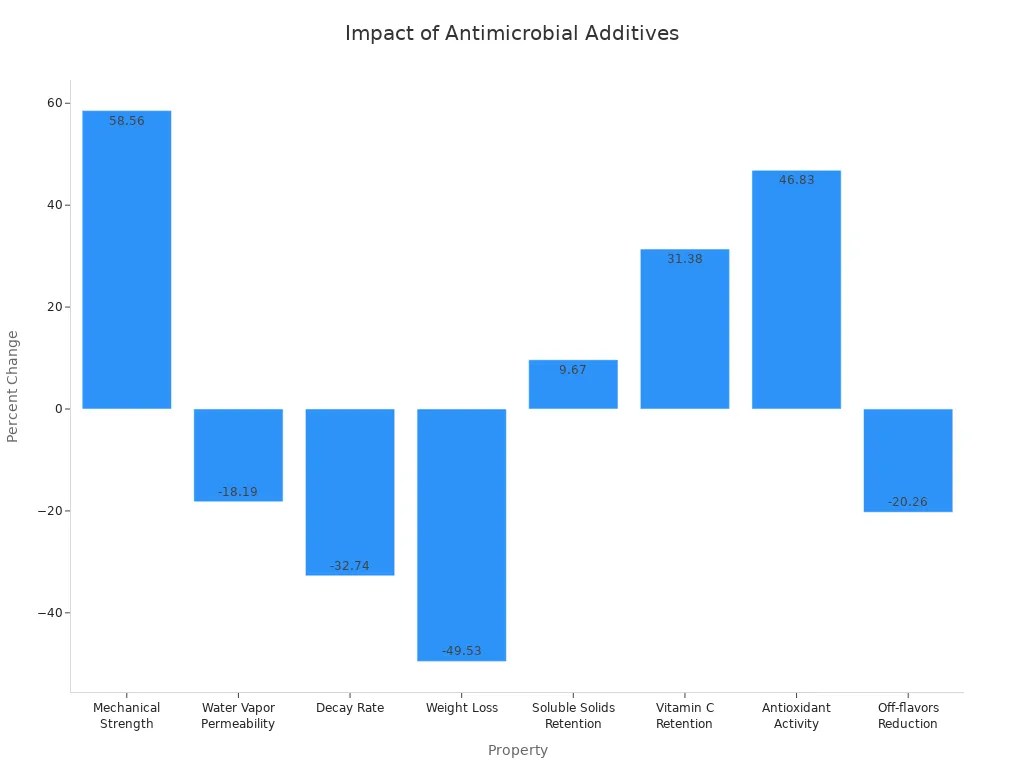
These enhancements ensure that microporous films not only block pathogens effectively but also maintain their integrity over time. This makes them a reliable choice for protective garments in healthcare settings.
How Does a Microporous Film Level 4 Gown Block Pathogens?
Size Exclusion Mechanism
The size exclusion mechanism is a key feature of microporous films. This mechanism works by retaining particles larger than the membrane’s pore size. As a result, harmful pathogens cannot pass through. For example, studies show that even though the MS2 virus is smaller than the φX174 bacteriophage, it gets removed more effectively due to size exclusion and electrostatic repulsion. This demonstrates how crucial pore size is for blocking pathogens.
Here are some important points about the size exclusion mechanism:
It effectively prevents the passage of larger pathogens.
Mathematical modeling confirms that pore size is critical for pathogen retention.
The mechanism relies on the physical size of the pathogens compared to the pores.
Filtration Processes
Filtration processes in microporous films enhance their ability to block pathogens. These processes involve both size exclusion and additional filtration methods. The combination of these methods creates a robust barrier against various pathogens.
However, there are limitations to consider. Creating defect-free membranes is challenging. Defects can allow smaller particles, such as salts, to permeate through the membrane. This compromises the effectiveness of size exclusion. Intrinsic defects from the growth process can range from 1 to 15 nm, making it difficult to control sub-nanometer pores.
Level 4 Gown Features

Material Composition
Level 4 gowns utilize advanced materials that enhance both protection and comfort. The combination of these materials creates a barrier against pathogens while ensuring the wearer remains comfortable during use. Here are some common materials used in the construction of these gowns:
Material Type | Description |
|---|---|
Includes SMS (Spunbond Meltblown Spunbond), which provides superior fluid barrier protection. | |
Poly-Coated Laminates | Offers improved breathability compared to traditional PE-coated options. |
These materials work together to block invisible nanoscale pathogens effectively. The unique properties of each material contribute to the gown’s overall performance in healthcare settings.
Design for Comfort and Protection
The design of Level 4 gowns prioritizes both comfort and protection. You will find several features that enhance usability and safety:
Premium Materials: These materials keep you cool and comfortable, even during long procedures.
Unique Designs: Gowns come with customized fits that allow for ease of movement.
Secure Closure: This feature ensures easy donning and doffing, enhancing usability.
Variety of Styles and Sizes: Gowns accommodate different body types and preferences.
Additionally, gowns designed for easy removal at the neck and snugness at the wrist significantly reduce contamination during PPE removal. Enhanced gown features improve workflow efficiency and simplify training for proper PPE use.
Breathable film sleeves enhance airflow, reducing overheating during extended wear. A variety of sizes ensures a proper fit for comfort. Research shows that comfortable protective wear increases compliance by 20% among healthcare workers, directly correlating to improved safety outcomes.
The white paper on infection prevention emphasizes that gowns with improved neck closure and extended cuff coverage lead to significant reductions in contamination at high-risk areas. This highlights how thoughtful design can enhance both comfort and protection.
By understanding how these features work together, you can appreciate the importance of Level 4 gowns in safeguarding healthcare professionals against harmful pathogens.
Testing Standards for Effectiveness
To ensure that microporous film Level 4 gowns provide adequate protection, various testing standards exist. These standards evaluate the effectiveness of the gowns against pathogens and other harmful substances.
Effectiveness Testing Methods
Several standardized testing methods assess the performance of Level 4 gowns. Here’s a summary of the key tests:
Level | Test Name | Description | Requirements |
|---|---|---|---|
1 | AATCC 42 | Less than 4.5g of water on blotter | |
2 | AATCC 42 & AATCC 127 | Impact and hydrostatic pressure tests | Less than 1.0g on blotter, 20 cm-H2O pressure |
3 | AATCC 42 & AATCC 127 | Impact and hydrostatic pressure tests | Less than 1.0g on blotter, 50 cm-H2O pressure |
4 | ASTM 1671 & ASTM 1670 | Viral penetration and blood penetration tests | No virus detected under pressure, no fluid visualization on fabric |
These tests help you understand how well a gown can block invisible nanoscale pathogens. For instance, ASTM 1671 specifically checks for viral penetration, ensuring that no viruses can pass through the fabric.
Regulatory Compliance
Regulatory agencies set strict guidelines for Level 4 gowns to ensure safety and effectiveness. Here are some key points regarding compliance:
Level 1 and 2 isolation gowns are classified as Class I medical devices by the FDA.
Level 3 isolation gowns require a 510(k) premarket notification, classifying them as Class II devices.
Surgical gowns also fall under Class II devices and must meet specific labeling requirements.
Gowns labeled as Surgical, Surgical Isolation, or rated at AAMI Level 3 or 4 are considered Class II devices. Manufacturers must submit a 510(k) clearance to demonstrate safety and effectiveness. Compliance with standards such as FDA 510(k), CE, ISO 13485, and AAMI Level 4 is essential for ensuring product reliability.
By understanding these testing standards and regulatory requirements, you can appreciate the rigorous processes that ensure Level 4 gowns effectively block harmful pathogens.
Real-World Applications of Level 4 Gowns
Healthcare Settings
Level 4 gowns are vital in various healthcare scenarios. They protect you from exposure to harmful pathogens, especially in high-risk environments. Here are some common situations where you need Level 4 gowns:
Scenario Description | Reason for Level 4 Gown Requirement |
|---|---|
Nonairborne pathogen resistance | High risk of exposure to pathogens that are not airborne. |
Surgeries requiring irrigation of large volumes of fluid | Increased risk of fluid exposure during surgical procedures. |
During outbreaks of highly infectious diseases, these gowns become even more crucial. Studies show that personal protective equipment (PPE), including gowns, is essential for protecting healthcare workers from pathogens in blood and body fluids. However, the effectiveness of gowns can vary based on the infectious agents and usage conditions.
Study | Findings |
|---|---|
Frontiers in Public Health | PPE, including gowns, is essential for protecting healthcare workers from pathogens in blood and body fluids. The effectiveness of gowns varies based on infectious agents and usage conditions. |
ScienceDirect | Contamination rates of gowns ranged from 0% to 77.5%. Evidence for the protective effect of long-sleeved gowns over alternatives is insufficient. |
CDC | Selection of gowns should consider the physical and chemical properties of fabrics and microorganism characteristics. |
Laboratory Use
In laboratory settings, Level 4 gowns are critical for personnel safety. They prevent significant fluid penetration and protect against virus exposure for extended periods. These gowns are specifically designed for environments with a high risk of exposure to bloodborne pathogens and non-airborne viruses.
Level 4 gowns have passed rigorous AAMI level 4 protection tests. This confirms their suitability for use in settings with the highest risk of exposure to bodily fluids and pathogens. They are essential for laboratory procedures that involve high-risk exposure, ensuring that you remain safe while conducting your work.
Microporous films play a vital role in blocking nanoscale pathogens. Their unique properties, such as size selectivity and antimicrobial activity, make them effective barriers. Recent research shows that these films can combat various pathogens, including airborne viruses.
Level 4 gowns provide superior protection compared to lower-level gowns. Here are some key points:
Level 4 gowns offer significantly higher pathogen protection.
They are designed for high-risk procedures, ensuring safety against blood and viral penetration.
Lower-level gowns are suitable for minimal to moderate risk tasks.
In summary, understanding the effectiveness of microporous films and the importance of Level 4 gowns enhances your ability to protect yourself and others in healthcare settings.
FAQ
What is a Level 4 gown?
A Level 4 gown is a protective garment designed to block harmful pathogens. It offers the highest level of protection against blood and viral penetration, making it essential in high-risk healthcare settings.
How do microporous films work?
Microporous films contain tiny pores that block pathogens while allowing moisture vapor to escape. This size exclusion mechanism prevents harmful particles from passing through, ensuring safety for the wearer.
Are Level 4 gowns reusable?
Most Level 4 gowns are single-use and designed for one-time wear. Reusing them can compromise their protective qualities and increase the risk of contamination.
How should I dispose of Level 4 gowns?
Dispose of Level 4 gowns according to your facility’s guidelines. Typically, you should place them in biohazard waste containers to ensure safe disposal and prevent contamination.
Can I wear a Level 4 gown for any procedure?
You should wear a Level 4 gown for high-risk procedures involving exposure to blood or infectious materials. For lower-risk tasks, consider using gowns with a lower protection level.


