


3 Mil vs. 5 Mil vs. 6 Mil Nitrile Gloves: Which Disposable Glove Thickness Fits Your Needs?
Nitrile glove thickness is only one piece of the safety puzzle. Learn the critical difference between 3, 5, and 6 mil, and discover why factors like sizing, texture, and finish are essential for PPE efficiency. Master your facility’s safety standards and optimize your budget with our comprehensive guide to selecting the right disposable gloves for any industry.

Exploring the Uses of Disposable Coveralls and Protective Clothing PPE Across Sectors
Disposable coveralls are single-use protective garments designed to shield workers
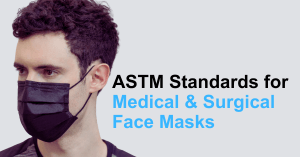
Understanding ASTM standards: ASTM F2100-21 Guide: Level 1, 2, and 3 Medical Mask Standards
What are the ASTM standards? ASTM F2100 outlines the performance requirements & test methods for medical facemasks used in patient care. Learn more about the details.

Hospital Gown Colors & Patient Gowns Guide: What Blue, Yellow, and Purple Signify.
In the post-pandemic era, the role of Personal Protective Equipment

The Environmental Impact of Nitrile Gloves: ESG Procurement & Decision Guide
Introduction Environmental Impact of Nitrile Gloves: Viewed as the most
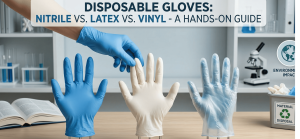
Nitrile vs Latex vs Vinyl Gloves – Understand difference between these 3 gloves types
Nitrile vs Latex vs Vinyl Gloves – What’s the difference between these 3 gloves types? Let us look into the differences & apllications.

The Manufacturing Process of High-Performance Protective Coveralls: A Guide by Leading PPE Manufacturers
Body coverall and medical gowns are worn by front-line medical staff who have constant contact with patients. American National Standards Institute (ANSI) and the Association of the Advancement of Medical Instrumentation (AAMI) describe AAMI-PB 70 as protective apparel and drapes intended for use in health care facilities that are resistant to the pathogen, Infectious diseases (non-airborne), and large amounts of fluid exposure over long periods.

What is SMS non-woven fabric? Here is a complete guide you must know!
What is SMS non-woven fabric? This article explains various types of SMS non-woven fabric. If you manufacture disposable garments, read this.

How to Choose the Right Medical Gown: A Risk-Based Comparison for Healthcare Facilities
The article delineates the distinctions between surgical gowns and isolation gowns, emphasizing their respective designs, materials, and applications. Surgical gowns are constructed from fluid-resistant or fluid-proof fabrics and are utilized in sterile environments such as operating rooms to maintain sterility. Conversely, isolation gowns are intended to protect healthcare workers from contamination during patient care, offering varying levels of barrier protection based on the associated risk. Proper selection of these gowns necessitates an understanding of the specific protection requirements to ensure safety and adherence to healthcare standards.
NFPA Standards Explained: Choosing the Right PPE Gear for Maximum Safety
NFPA is an organization through its 250 technical commissions, dedicated to eliminating fire, electrical, and other types of hazards. If you are buying protective clothing to prevent different types of hazards, you need to read this.

2024-2025 Guide: Comparing N95, FFP2, KN95, KF94 Respirators (Standard Updates & Selection)
N95, FFP2, KN95, P2, KF94, and DS2. With so many different types of face masks on the market to choose from, which one is the right one for you?
Comprehensive Guide to SMS non-woven Fabric: Technology, Standards, and Medical Applications
What is SMS non-woven fabric? This article explains various types of SMS non-woven fabric. If you manufacture disposable garments, read this.

Disposable vs. Reusable Coveralls: Safety & Total Cost of Ownership (TCO) Guide
Navigating the choice between disposable and reusable PPE is more than a cost comparison—it’s a critical safety decision. This technical guide explores the Total Cost of Ownership (TCO), AAMI PB70 compliance, and supply chain resilience to help healthcare procurement professionals optimize protection for high-risk clinical environments.
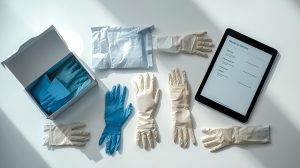
Sterile vs. Non-sterile Gloves: A Clinic Buyer’s Guide to Infection Control and Quality
Choosing between sterile and non-sterile gloves is a critical decision that balances patient safety with clinic efficiency. In this comprehensive guide, we break down the invisible science of Gamma irradiation and SAL (Sterility Assurance Level), the clinical evidence supporting cost-effective glove choices for minor procedures, and the ‘AQL’ report card every buyer needs to read. From managing latex allergies to mastering proper donning techniques, discover how to optimize your clinic’s resources without ever compromising on infection control.

Understanding Glove Standards: ASTM, EN 455, FDA 510(k), and ANSI
Not all gloves are created equal. This comprehensive guide breaks down the critical differences between Medical Grade and Industrial Grade gloves, from AQL 2.5 standards and FDA 510(k) clearance to ASTM and EN certifications. Learn how to evaluate tensile strength, chemical resistance, and mil thickness to ensure your team is equipped with the right PPE for healthcare, industrial, or food safety applications.

What’s the Difference Between ANSI and ASTM?
You see these acronyms stamped on your safety glasses, printed on your medical masks, and molded into the bottom of your child’s toys. But what do they actually mean?

What essential digital checklists are required for effective tear-away PPE procurement?
Essential digital checklists for effective tear-away PPE procurement streamline processes and ensure compliance with safety standards.

Who saw the biggest success rate when a major hospital tried to reduce ER self-inoculation?
Who saw the biggest success rate in reducing ER self-inoculation? Discover how targeted strategies led to significant improvements in major hospitals.
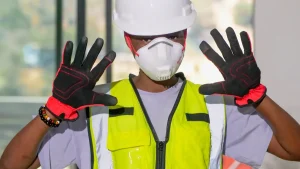
How do tear-away PPE time savings accumulate to 50 minutes per 12-hour shift?
Tear-away PPE can save you up to 50 minutes per 12-hour shift by allowing quick removal, enhancing efficiency and safety in high-pressure environments.

When prioritizing life-saving actions which scenarios demand quick-release resuscitation trauma PPE?
When prioritizing life-saving actions, discover 5 scenarios that demand quick-release resuscitation trauma PPE for effective emergency response.
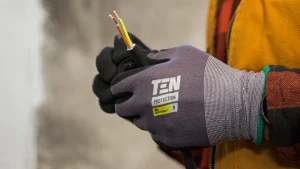
Where is the optimal layout for an MCI triage PPE setup when mass casualties arrive?
The optimal layout for an MCI triage PPE setup ensures safety and efficiency when mass casualties arrive. Learn how to arrange PPE effectively.

How should ER nurses execute the standard 10-second rapid doffing SOP to avoid self-inoculation?
ER nurses should execute the 10-second doffing SOP by following the correct sequence to avoid self-inoculation and ensure safety.
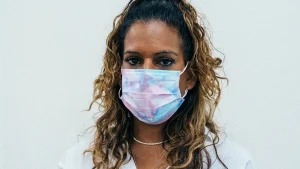
What hospital safety protocols define the ideal tear-away gown tensile strength?
Hospital safety protocols define tear-away gown tensile strength to ensure effective protection against contamination and infection spread.

How does an over-the-head trauma gown function seamlessly during rapid response situations?
An over-the-head trauma gown functions seamlessly during rapid response situations, enhancing efficiency and patient care in emergencies.

Why does a tie-back gown donning delay highlight the urgent need for quick-release alternatives?
A tie-back gown donning delay highlights the urgent need for quick-release alternatives to enhance patient safety and reduce infection risks.
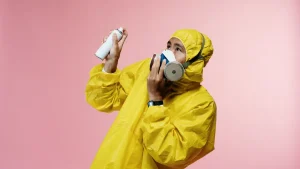
What fatal factors contribute to the 46% doffing contamination rate in emergency rooms?
Address the 46% doffing contamination rate in emergency rooms by identifying fatal factors and implementing effective doffing strategies.

What calculation tools help hospital administrators prove the ASTM F1671 gown ROI?
Discover what calculation tools help hospital administrators prove the ASTM F1671 gown ROI, ensuring effective investment decisions in 2026.

Where do clinical studies utilizing fluorescent test gown contamination reveal the most vulnerable zones?
Clinical studies using fluorescent test gowns reveal contamination vulnerabilities primarily in the neck, hands, and surgical fields during procedures.

How did a Level 1 Trauma Center reduce occupational blood exposure using F1671 barriers?
A Level 1 Trauma Center reduced occupational blood exposure by 50% using F1671 barriers, enhancing safety for staff and patients alike.

When treating HIV/HCV what is the exact protocol for deploying PPE for bloodborne pathogens?
When treating HIV/HCV, follow strict PPE protocols to protect against bloodborne pathogens. Learn the exact steps for effective PPE deployment.
Where should you stage your gear according to high-risk trauma PPE storage guidelines?
Stage your PPE gear effectively for high-risk trauma by following storage guidelines that ensure quick access and safety during emergencies.
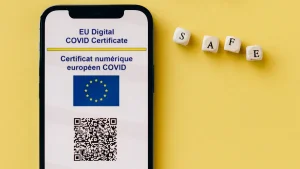
How should infection control teams accurately verify ASTM F1671 certification labels?
Infection control teams should verify ASTM F1671 certification labels by checking documentation, validating test results, and consulting authoritative sources.
Why is passing the 27nm Phi-X174 viral penetration test the gold standard for biological barriers?
Passing the 27nm Phi-X174 viral penetration test is essential for ensuring safety and compliance in healthcare, establishing the gold standard for biological barriers.
How does a taped seams trauma gown physically stop fluids from penetrating vulnerable joints?
Taped seams in trauma gowns physically stop fluids by sealing stitch points, preventing penetration at vulnerable joints during critical medical procedures.

What makes the 34.3% trauma gown strike-through risk a critical danger for ER nurses?
The 34.3% trauma gown strike-through risk poses critical dangers for ER nurses, exposing them to harmful pathogens and compromising patient care.

Why does the ASTM F1670 vs F1671 debate matter when synthetic blood tests fail to protect staff?
The ASTM F1670 vs F1671 debate matters for safety as it highlights risks when synthetic blood tests fail to protect healthcare staff from pathogens.

What are the essential criteria in the ultimate Level 4 gown supplier checklist?
What are the essential criteria in the ultimate Level 4 gown supplier checklist? Consider performance standards, material quality, and supplier reputation.
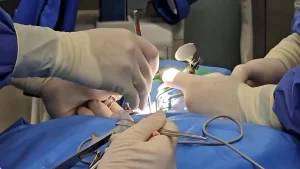
Who benefits most from a full-coverage trauma surgeon PPE configuration during resuscitation?
Full-coverage trauma surgeon PPE benefits everyone involved in resuscitation, enhancing safety, infection control, and patient outcomes.

Why is preventing occult blood exposure the primary reason for adopting Level 4 standards?
Preventing occult blood exposure is crucial for safety. Discover why adopting Level 4 standards is essential for healthcare compliance and protection.

When should your team deploy MTP trauma PPE during a massive transfusion protocol?
Your team should deploy MTP trauma PPE during massive transfusions when signs of hemorrhage or trauma are evident to ensure safety and effective care.

Where are the highest-risk trauma gown pressure points during intensive surgical leaning?
Identify the highest-risk trauma gown pressure points during intensive surgical leaning to prevent injuries and enhance patient safety in trauma care.

How to doff Level 4 PPE properly to prevent cross-contamination in the ER?
Learn how to doff Level 4 PPE properly to prevent cross-contamination in the ER, ensuring safety for healthcare workers and patients.
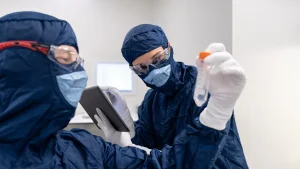
What specific AAMI Level 4 compliance requirements guarantee true barrier protection?
AAMI Level 4 compliance ensures maximum barrier protection through rigorous testing and critical zone coverage, safeguarding against infectious agents.

How does a microporous film Level 4 gown block invisible nanoscale pathogens?
A microporous film Level 4 gown blocks invisible nanoscale pathogens through size exclusion and filtration, ensuring safety in healthcare environments.

Why is the 2.3 PSI trauma gown hydrostatic pressure threshold critical for survival?
The 2.3 PSI trauma gown hydrostatic pressure threshold is critical for survival, ensuring safety and infection control in medical environments.
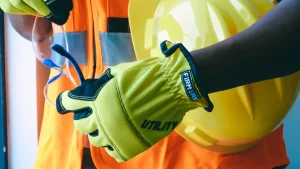
What makes standard gowns fail when you need Level 4 PPE for arterial spray?
Standard gowns fail in Level 4 PPE due to inadequate barrier protection, poor fit, and material limitations, risking exposure to arterial spray.

Top Common Mistakes in Doffing PPE That Compromise Your Safety
Doffing PPE is more than just taking off gear; it’s a high-stakes procedure where a single slip can lead to cross-contamination. Learn to identify the critical errors that jeopardize frontline safety and discover the professional fixes to ensure you leave the workplace as clean as you arrived
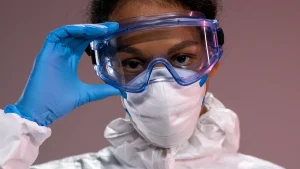
How to Balance Comfort and Protection with 36 GSM Isolation Gowns?
Select isolation gowns that balance comfort and protection with 36 GSM options, ensuring safety and usability in healthcare settings.

How to Implement Zonal Safety Using a Yellow AAMI Level 4 Isolation Gown?
Implement zonal safety effectively with yellow AAMI Level 4 gowns. Learn best practices for usage and enhance protection in healthcare settings.

How to Ensure Safety During Rounds with Isolation Gowns for Basic Patient Care & Visitor Use?
Ensure safety during rounds with isolation gowns by following proper donning and doffing techniques to prevent infection transmission.

How to Manage Elderly Infection Risks with Isolation Gowns for Long-Term Care Facilities?
Isolation gowns are essential for managing elderly infection risks in long-term care facilities, providing vital protection against harmful pathogens.

How to Manage Mild to Moderate Fluid Exposure with PE Coated Isolation Gowns?
Manage mild to moderate fluid exposure effectively with PE coated isolation gowns. Learn best practices for safety and protection in healthcare settings.

How to Accelerate Emergency Responses Using Over-the-Head Design Isolation Gowns?
Choose the right isolation gown for emergencies to accelerate responses. Focus on over-the-head designs for optimal protection and compliance.

How to Optimize Infection Control with Disposable Isolation Gowns for Hospitals?
Optimize infection control with disposable isolation gowns in hospitals by improving compliance, material selection, and best practices for safety.
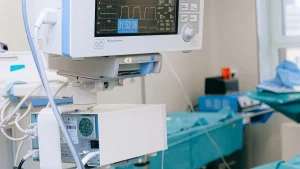
How to Navigate Hospital Procurement with FDA 510(k) Cleared Isolation Gowns?
Navigate hospital procurement with FDA 510(k) cleared isolation gowns by verifying suppliers, assessing quality, and ensuring compliance for patient safety.

How to Stop Microscopic Viral Penetration Using Isolation Gowns with Taped Seams?
Learn how to stop microscopic viral penetration using isolation gowns with taped seams. Ensure maximum protection in healthcare settings.

How to Ensure Full-Body Protection with Disposable Coveralls for Decontamination?
Ensure full-body protection with disposable coveralls for decontamination by following proper procedures and safety guidelines.
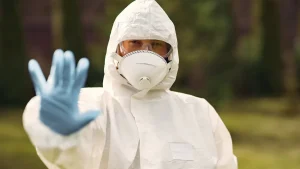
How to Prevent Wrist Exposure Using Isolation Gowns with Thumb Loops?
Learn how to prevent wrist exposure using isolation gowns with thumb loops for better safety and hygiene in healthcare settings.

How to Maintain Infection Control Using Isolation Gowns for ICU Settings?
Maintain infection control using isolation gowns in ICU settings by following best practices for usage, changing gowns, and ensuring proper training.
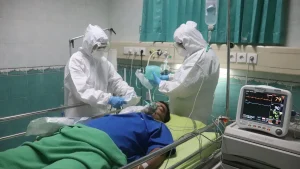
How to Optimize ER Trauma Responses Using AAMI Level 4 Isolation Gowns for Emergency Rooms?
Optimize ER trauma responses with AAMI Level 4 isolation gowns, ensuring maximum protection against contamination and enhancing patient care in emergencies.