


Ensuring OSHA compliance is crucial for safety in workplaces that handle bloodborne pathogens. You must understand the specific steps to achieve compliance. This knowledge protects not only your employees but also the overall health of your workplace. Following proper procedures minimizes risks associated with bloodborne diseases. Make it a priority to learn how to meet bloodborne pathogens standards with OSHA compliant decontamination PPE. Your commitment to safety is essential in achieving these standards.
Key Takeaways
-
Understand bloodborne pathogens and their risks. Recognize that exposure can lead to serious diseases like hepatitis and HIV.
-
Always use personal protective equipment (PPE) such as gloves and masks. This minimizes the risk of exposure to infectious materials.
-
Implement an effective exposure control plan. Regularly review and update this plan to ensure it meets current safety standards.
-
Participate in ongoing training about bloodborne pathogens. This keeps you informed about safety practices and compliance requirements.
-
Prioritize safety in your workplace. A commitment to OSHA compliance protects employees and enhances your organization’s reputation.
Understanding Bloodborne Pathogens

Definition and Risks
Bloodborne pathogens are infectious microorganisms found in human blood. They can cause serious diseases in humans. The primary risks associated with exposure include:
|
Primary Risks Associated with Exposure |
|
|---|---|
|
Infectious microorganisms in human blood that can cause disease in humans. |
Diseases such as hepatitis B (HBV), hepatitis C (HCV), and human immunodeficiency virus (HIV). Exposure can occur through contamination by blood, other body fluids, or other potential infectious materials (OPIM). Workers in various occupations, including first responders and healthcare personnel, are at risk. |
You must recognize that exposure to these pathogens can lead to severe health consequences. For example, healthcare workers often face risks due to their direct contact with patients and bodily fluids. The infections can result in chronic hepatitis, cirrhosis, and even liver cancer. Additionally, the psychological impact of these infections can be significant, leading to high rates of morbidity and mortality among healthcare workers.
However, the danger isn’t limited just to blood. It’s crucial to understand that these pathogens can also be present in Other Potentially Infectious Materials (OPIM). The Occupational Safety and Health Administration (OSHA), operating under the federal Occupational Safety and Health Act, sets strict guidelines to mitigate these risks. These regulations apply broadly across various workplaces where exposure is a risk. This means the standards are designed to protect everyone—from front-line medical professionals in busy emergency rooms to scientists working behind closed doors in a research laboratory.
Common Bloodborne Pathogens
In workplaces, you may encounter several common bloodborne pathogens. These include:
-
Hepatitis B (HBV)
-
Hepatitis C (HCV)
-
Human Immunodeficiency Virus (HIV)
-
Cytomegalovirus (CMV)
-
Other BBPs
Understanding these pathogens is crucial for your safety and the safety of your colleagues. By being aware of the risks and the types of pathogens you might encounter, you can take the necessary precautions to protect yourself and others in your workplace. When we talk about the primary threats in occupational exposure, we are looking specifically at Hepatitis B, Hepatitis C, and the Human Immunodeficiency Virus (HIV). In everyday work environments, these serious viruses are most commonly transmitted through accidental needle sticks, cuts from unsterilized sharp objects, or when infectious bodily fluids make direct contact with broken skin or mucous membranes.
Universal Precautions

Personal Protective Equipment (PPE)
Universal precautions are essential for protecting yourself and others from bloodborne pathogens. This approach treats all human blood and certain body fluids as if they are infectious. You must always assume that exposure to blood or other potentially infectious materials can occur. To minimize risks, you should use personal protective equipment (PPE) such as gloves, masks, and gowns whenever you anticipate contact with these materials.
Tip: Always keep PPE readily available in your workplace. This ensures you can quickly access it when needed.
Studies show that effective use of PPE significantly reduces the risk of bloodborne pathogen transmission. For instance, during emergencies, prearranged distribution of PPE can help minimize infection risks. However, remember that inconsistent practices can lead to increased exposure. Therefore, always follow established guidelines for PPE use.
A comprehensive approach to your personal protective equipment is your best defense against invisible threats. For example, if a procedure carries any risk of blood splatter, you must wear goggles to shield the vulnerable mucous membranes of your eyes. In higher-risk environments, particularly where aerosolized particles might be present, standard surgical masks fall short; you should elevate your respiratory protection by utilizing an N95 respirator. Furthermore, whenever you are handling potentially infectious materials, you must strictly wear disposable gloves and a disposable gown. Once the task is complete, these items must be safely discarded—never reused—to stop cross-contamination in its tracks.
Safe Handling and Disposal
Proper handling and disposal of sharps and contaminated materials are critical for maintaining a safe work environment. OSHA outlines specific requirements for these processes. Here’s a summary of the key requirements:
|
Requirement |
Description |
|---|---|
|
Accessibility |
Containers must be easily accessible and placed close to where sharps are used. |
|
Construction |
Must be puncture-resistant, with leakproof sides and bottoms. |
|
Identification |
Appropriately labeled or color-coded to indicate biohazardous contents. |
|
Design |
Containers should be closable to prevent spillage and must remain upright. |
|
Maintenance |
Containers should be replaced routinely before they are overfilled to reduce injury risks. |
|
Handling Reusable Sharps |
These should not be manually opened, emptied, or cleaned in a way that exposes workers to injuries. |
|
Storage of Contaminated Reusables |
Ensure contaminated reusable sharps are stored in a way that does not require hand-reaching into containers. |
By following these guidelines, you can significantly reduce the risk of exposure to bloodborne pathogens in your workplace. Always prioritize safety and ensure that everyone understands the importance of proper handling and disposal practices.
To truly secure your facility, proper sorting is non-negotiable. Staff must clearly understand the difference between everyday trash, standard medical waste, and highly regulated hazardous waste. Any sharp hazardous materials, such as used needles or broken glass tubes, must be instantly deposited into dedicated, puncture-proof sharps disposal containers. For non-sharp items—like gauze or bandages saturated with blood—you must use clearly marked biohazard bags or rigid biohazard containers to ensure the safe containment and transport of the infectious materials.
Training Requirements
Employee Training Programs
OSHA mandates specific training elements for employees who may be exposed to bloodborne pathogens. You must ensure that your training programs cover the following key topics:
-
Engineering controls: Understand devices that isolate or remove potential hazards.
-
Cleaning and disinfecting: Learn about the proper equipment and supplies needed for effective cleaning.
-
Personal protective equipment (PPE): Familiarize yourself with gloves, gowns, eye protection, and masks.
-
Personal hygiene: Emphasize the importance of proper handwashing techniques.
-
Safe handling and disposal: Know how to manage bloodborne pathogens safely.
-
Universal and standard precautions: Recognize the importance of treating all blood and body fluids as potentially infectious.
-
Hazard communication practices: Learn how to communicate risks effectively.
-
Recognizing and reporting exposures: Understand how to identify and report any potential exposures to bloodborne pathogens.
Training is essential for maintaining a safe workplace. It equips you with the knowledge to protect yourself and your colleagues from potential hazards.
A structured training program is effectively the beating heart of workplace infection prevention. Holding regular training sessions is about more than fulfilling a legal quota; it is about building a culture of safety. This education must prioritize hazard communication, ensuring every team member clearly grasps the biological and chemical threats they face daily. Crucially, when you deliver employee training, the content must be tailored to the health literacy level of your staff. If the language is too academic or complex, the message is lost—safety protocols only work when everyone can easily understand and apply them.
Ongoing Education and Resources
OSHA requires ongoing education to keep you informed about bloodborne pathogens. Regular training sessions help reinforce safety practices and update you on new procedures. Here’s a summary of the training frequency required by OSHA:
|
Training Requirement |
Frequency |
|---|---|
|
At time of hire |
Once |
|
Initial assignment |
Once |
|
Annual retraining |
Annually |
You must participate in training at the time of hire and whenever you take on new tasks that may increase exposure risks. Annual retraining is also necessary to refresh your knowledge and skills.
Note: Annual training is mandated by OSHA’s standard for occupational exposure to bloodborne pathogens. This ensures that you remain aware of the latest safety protocols and practices.
For ongoing education, OSHA recommends several resources to enhance your understanding of bloodborne pathogens:
|
Resource Type |
Description |
Link |
|---|---|---|
|
Contains training and reference materials related to bloodborne pathogens. |
||
|
Browse for distance learning courses and resources. |
||
|
Publications |
A guide to compliance with OSHA standards in medical and dental offices. |
|
|
Includes model exposure control and hazard communication plans. |
||
|
Personal Protective Equipment |
Helps understand PPE types and training needs. |
Utilizing these resources will help you stay informed and compliant with OSHA standards. Remember, ongoing education is vital for maintaining a safe work environment, especially when dealing with bloodborne pathogens.
Completing this education often serves a dual purpose. For many healthcare and safety roles, rigorous OSHA training is heavily tied to maintaining professional certification requirements. Additionally, while federal rules set an excellent baseline, you must stay alert to local legislation. For instance, major municipalities like Philadelphia may have their own specific, and sometimes stricter, localized ordinances regarding biomedical waste management that your facility must navigate.
Compliance Measures
Exposure Control Plan
An effective exposure control plan is essential for maintaining safety in workplaces that handle bloodborne pathogens. This written plan outlines how you will protect employees from exposure risks. According to OSHA, your exposure control plan must include several key components:
-
Exposure determination: Identify which employees are at risk of exposure.
-
Schedule and method of implementation: Outline how you will implement safety measures.
-
Evaluation procedures: Establish how you will evaluate exposure incidents.
-
Documentation: Keep records of input from non-managerial employees.
Additionally, your plan should detail methods for staff protection, including universal precautions and personal protective equipment (PPE). It must also include policies for Hepatitis B vaccination and post-exposure evaluation. A communication plan for potential hazards is vital, as is required recordkeeping.
Think of your exposure control plan as the definitive blueprint for your entire infection control strategy. It is not just paperwork; it is the very first document a safety inspector will review to evaluate whether your facility is truly aligning with federal OSHA standards.
You must review and update your exposure control plan regularly. OSHA mandates annual reviews, and you should also update the plan whenever new job roles, equipment, or policies are introduced. If an exposure incident occurs, review the plan to identify weaknesses and improve safety measures.
|
Requirement Type |
Frequency/Condition |
|---|---|
|
Annual Reviews |
At least once a year as per OSHA’s Bloodborne Pathogens Standard. |
|
As Needed Updates |
Whenever new job roles, equipment, or policies related to exposure control are introduced or modified. |
|
Incident Review |
Following any exposure incident that reveals weaknesses in the existing plan. |
Engineering Controls
Engineering controls play a crucial role in minimizing occupational exposure to bloodborne pathogens. These controls isolate or remove hazards from the workplace. OSHA emphasizes that you should prioritize engineering controls wherever feasible. Here are some effective engineering controls you can implement:
|
Type of Control |
Description |
Examples |
|---|---|---|
|
Engineering Controls |
Isolate or remove the hazard from the workplace. |
Sharps disposal containers, self-sheathing needles, safer medical devices (e.g., sharps with engineered safety protections) |
|
Work Practice Controls |
Reduce the likelihood of exposure by altering how tasks are performed. |
Prohibiting recapping of needles by a two-handed technique |
By implementing these controls, you can significantly reduce the risk of exposure to bloodborne pathogens. For instance, using sharps disposal containers ensures that needles and other sharp objects do not pose a risk to employees. Additionally, safer medical devices can help prevent accidental injuries during procedures.
While safer needles and enclosed sharps boxes are critical, environmental safety mechanisms are equally vital. Facilities must invest in proper ventilation—such as installing specialized biological safety cabinets or utilizing negative pressure isolation rooms. These serve as powerful engineering controls that actively scrub and manage the air, drastically lowering the risk of airborne or aerosolized pathogen exposure.
How to Meet Bloodborne Pathogens Standards with OSHA Compliant Decontamination PPE?
Personal protective equipment (PPE) plays a vital role in ensuring compliance with OSHA standards for bloodborne pathogens. You must wear appropriate PPE to protect yourself from exposure to infectious materials. The required PPE includes:
-
Fluid-resistant or fluid-impermeable gowns
-
Goggles or face shields
-
Facemasks covering your nose and mouth
Always ensure that disposable gloves are available. You should wear them whenever contact with blood is likely. Remember, gloves must not be reused. Replace them when they become contaminated or damaged.
Proper decontamination procedures are essential for maintaining a safe work environment. If a garment becomes penetrated by blood or other potentially infectious materials, you must remove it immediately. Take off the garment before leaving the work area. When you remove PPE, place it in the appropriate container for storage, washing, decontamination, or disposal.
Tip: When removing a gown, unfasten the ties carefully. Avoid letting the sleeves touch your body. Pull the gown away from your neck and shoulders, touching only the inside. Turn the gown inside out, fold or roll it into a bundle, and discard it in a waste container.
Implementing effective decontamination procedures can significantly reduce workplace-acquired infections. Here are some common procedures:
|
Procedure Type |
Description |
Impact on Infection Rates |
|---|---|---|
|
Continuous Decontamination |
Performed throughout a shift by clinical lab technicians. |
Reduces risk of contamination between analyses. |
|
Post-Procedure Decontamination |
Required after procedures that result in surface contamination. |
Prevents transmission of pathogens after tasks. |
|
End of Shift Decontamination |
Required if surfaces may have become contaminated. |
Ensures cleanliness before the next work period. |
Proper Disinfection and Cleaning Procedures
Meeting OSHA’s stringent standards requires more than just wearing the right gear; it demands a flawless disinfection routine. When sanitizing a contaminated spill or wiping down sensitive cleaning equipment, reaching for standard, over-the-counter janitorial supplies is a dangerous mistake. You are required to use professional-grade chemical disinfectants. Specifically, regulations demand the use of EPA registered disinfectants that carry claims proving they are effective against formidable bloodborne pathogens like HIV and Hepatitis B. Applying these precise chemicals, and leaving them wet for the manufacturer’s recommended contact time, is the only surefire way to break the chain of infection.
By following these guidelines, you can meet bloodborne pathogens standards effectively. Your commitment to using compliant decontamination PPE will help protect you and your colleagues from potential health risks.
In summary, you must take essential steps to ensure OSHA compliance with bloodborne pathogens. These steps include understanding the risks, using personal protective equipment, and implementing an effective exposure control plan.
Remember: Ongoing commitment to safety is crucial. Regular training and employee involvement foster a proactive safety culture. This approach not only protects employees but also enhances your organization’s reputation.
By prioritizing compliance, you can avoid significant fines, legal risks, and operational disruptions. Organizations that maintain these standards enjoy lower insurance costs and improved employee retention rates. Your dedication to safety will create a healthier workplace for everyone.
FAQ
What are bloodborne pathogens?
Bloodborne pathogens are infectious microorganisms in human blood. They can cause diseases like hepatitis B, hepatitis C, and HIV. You must treat all blood and certain body fluids as potentially infectious.
How can I protect myself from exposure?
You can protect yourself by using personal protective equipment (PPE) such as gloves, masks, and gowns. Always follow universal precautions and practice safe handling and disposal of sharps and contaminated materials.
What should I do if I experience an exposure incident?
If you experience an exposure incident, wash the area immediately with soap and water. Report the incident to your supervisor and seek medical evaluation as soon as possible. Document the exposure for your records.
How often should I receive training on bloodborne pathogens?
OSHA requires initial training at the time of hire and annual retraining. You should also participate in additional training whenever you take on new tasks that may increase exposure risks.
What is an exposure control plan?
An exposure control plan is a written document that outlines how to protect employees from bloodborne pathogen exposure. It includes risk assessments, safety measures, and procedures for reporting incidents. Regular reviews and updates are essential.
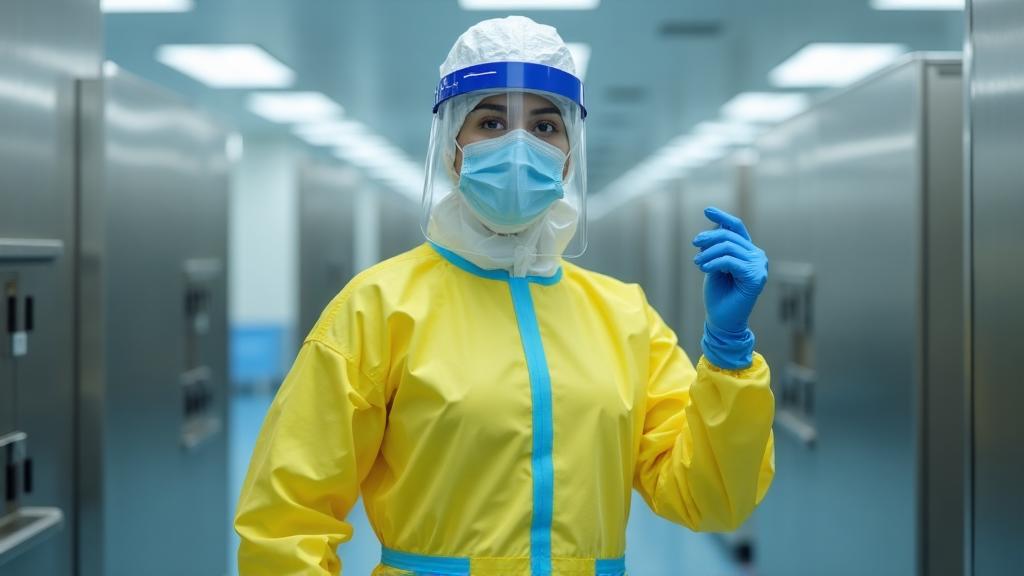
Head-to-Toe Zero-Gap Protection
Complete PPE integration for CSSD decontamination workflows


