

In the sterile corridors of hospital supply chains, procurement managers face a constant tug-of-war: the budget versus the barrier. A hospital’s inventory is typically filled with a wide variety of hospital gowns and general medical gowns for everyday patient care. However, when it comes to the rigorous protocols of professional surgical gowning, the stakes are exponentially higher. Specifically designed for high-risk operative environments, surgical gowns face the strictest safety standards in healthcare.
When sourcing this vital protective apparel, the acronyms on the spec sheet—SMS, SMMS, SMMMS—look like alphabet soup, but the difference between them can be the difference between a secure surgical field and a contamination breach.
The central question often lands on the upgrade from standard SMS (3-layer) to SMMS (4-layer) fabric. Is that extra layer of filtration just marketing fluff, or is it a critical insurance policy for high-stakes procedures? Specifically, for AAMI Level 3 compliance, is the extra investment worth the cost? Let’s dissect the anatomy of these fabrics to find the answer.
Understanding the Anatomy: SMS vs. SMMS Fabric Properties
To understand the value, we must first look under the microscope. Both fabrics belong to the family of composite materials scientifically known as spunbond meltblown spunbond. They are engineering marvels designed to do two contradictory things simultaneously: block liquids and allow air to pass through. Understanding how standard sms gowns operate with just a single filtration layer helps us see the physical limits they face under high fluid pressure.
The Power of “M”: Why the Meltblown Layer Defines Performance
The “S” (Spunbond) layers are the bread of the sandwich—they provide strength and structure. But the “M” (meltblown) layer is the meat. It is the functional barrier.
Through a high-velocity air process, molten polypropylene is blown into a web of ultra-fine microfibers. These fibers create a tortuous path—a microscopic maze—that traps filtration targets like water droplets and bacteria.
- SMS: Contains one meltblown layer.
- SMMS: Contains two distinct meltblown layers.
The extra “M” in SMMS isn’t just adding thickness; it exponentially increases the complexity of the filtration path. This makes it significantly harder for fluids and pathogens to navigate through the fabric, enhancing the overall protective performance without necessarily increasing the total weight of the gown.
Structural Differences: Comparing 3-Layer vs. 4-Layer Nonwovens
When comparing SMS vs. SMMS fabric properties, consistency is key. A common issue with single-layer meltblown (in standard SMS) is the potential for microscopic “thin spots” or pinholes during manufacturing.
By introducing a second meltblown layer, SMMS offers superior fiber distribution. The second layer covers any potential weak spots in the first, creating a redundant safety system. For procurement, this means composite materials made of SMMS offer a higher reliability index, reducing the statistical probability of barrier failure during critical moments.
Technology Comparison Table: Anatomy & Benefits
| Feature | Standard SMS (3-Layer) | SMMS (4-Layer) | Procurement Benefit (SMMS) |
|---|---|---|---|
| Layer Structure | Spunbond – Meltblown – Spunbond | Spunbond – Meltblown – Meltblown – Spunbond | Double Filtration Core |
| Filtration Path | Single complex path | Dual, redundant complex paths | Higher capture rate for pathogens |
| Fiber Distribution | Risk of microscopic “thin spots” | More uniform coverage | Reduced risk of pinhole failure |
| Fluid Barrier | Good (Dependent on GSM) | Excellent (Multi-layer stability) | Consistent protection under pressure |
Meeting the Standard: AAMI Level 3 Gowns Requirements
Purchasing decisions often hinge on compliance. For a surgical gown to be labeled AAMI Level 3, it must perform under pressure—literally.
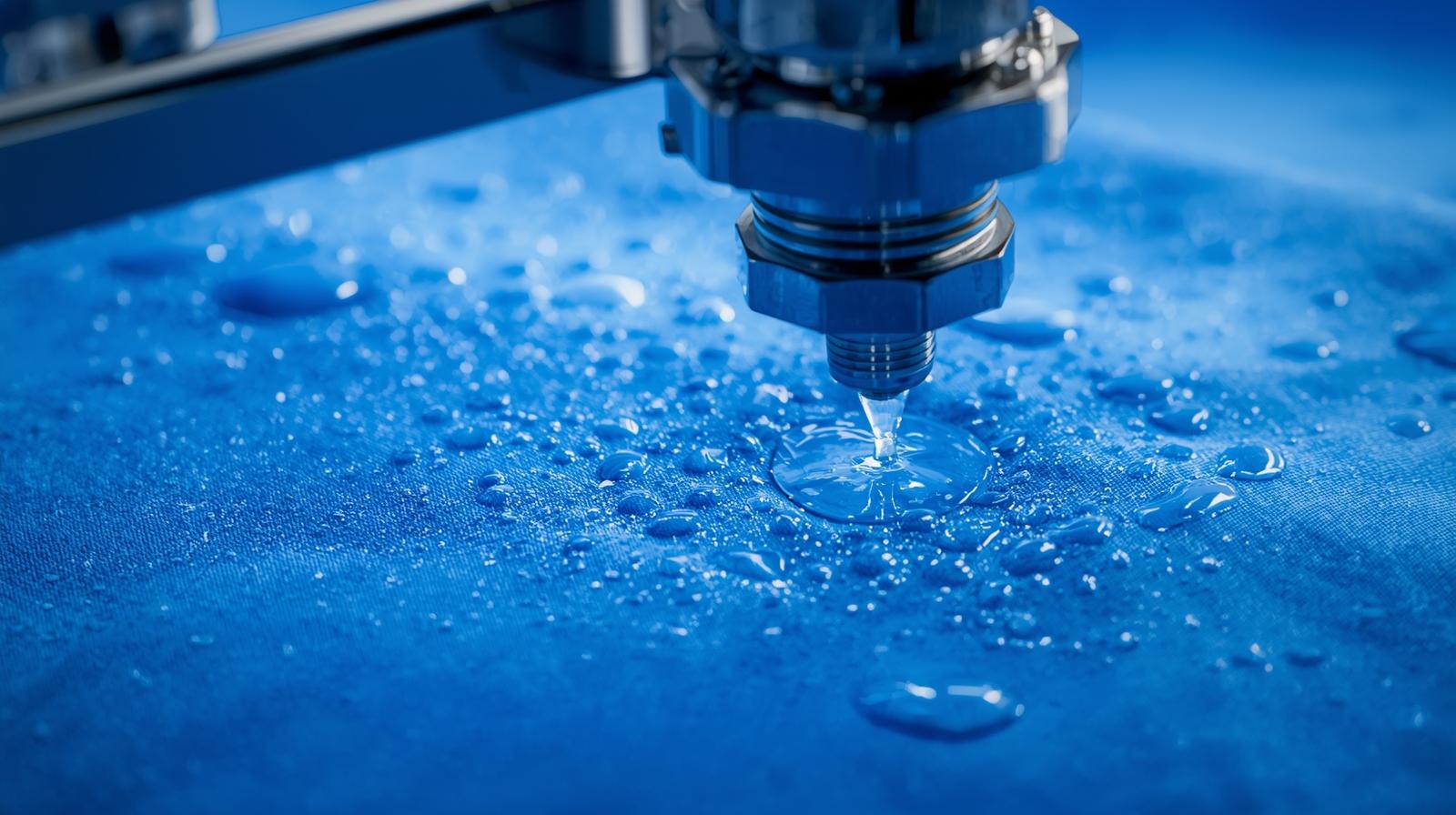
The Critical Role of Barrier Effect in High-Fluid Scenarios
AAMI Level 3 gowns are designed for moderate risk zones: arterial blood draws, IV insertions, and ER trauma cases. The defining metric is Hydrostatic Pressure. This critical 50 cmH2O water pressure test is not just a random number; it is derived directly from the strict, highly regulated US AAMI PB70 standards. Ensuring compliance means that only verified level 3 surgical gowns are trusted to provide safe, reliable fluid barriers during intense trauma surgeries without leaking.
Here lies the engineering challenge:
- Standard SMS: To achieve a hydrostatic pressure of >50 cmH2O with a single meltblown layer, manufacturers often have to increase the fabric’s density (GSM). This “thickening” strategy works for fluid resistance, but often results in a stiff, cardboard-like feel.
- SMMS: The multi-layer structure optimizes the barrier effect. Because there are two filtration layers, SMMS can often achieve the 50 cmH2O threshold at a lighter total weight. It provides robust barrier effect stability, ensuring that the fluid resistance holds up even when the surgeon leans against a wet table.
Performance Efficiency Matrix: AAMI Level 3 Achievement
| Metric for AAMI Level 3 (>50 cmH2O) | Heavy-Duty SMS | Optimized SMMS | Winner |
|---|---|---|---|
| Fabric Weight (GSM) | High (~45-60 gsm) | Moderate (~35-45 gsm) | SMMS (Lighter) |
| Stiffness / Handfeel | Stiff, boardy | Softer, drapeable | SMMS (More Comfortable) |
| Breathability (Delta P) | Low (Traps heat) | High (Allows airflow) | SMMS (Cooler) |
| Barrier Stability | Moderate | High | SMMS (Safer) |
(Note: GSM values are estimated industry ranges for reference and may vary by specific product technology.)
Viral and Bacterial Filtration Efficiency: Is SMMS Safer?
While AAMI Level 3 focuses heavily on water resistance, the biological reality of surgery involves pathogens. Bacteria and viruses are much smaller than water droplets.
The dual-meltblown core of SMMS typically yields a higher filtration rate for biological contaminants. While both fabrics might pass the water test, SMMS generally offers superior Bacterial Filtration Efficiency (BFE). In the landscape of medical protective equipment, that extra layer acts as a finer sieve, providing an additional margin of safety against microbial ingress that water tests alone might not reveal.
Why SMMS is the Superior Choice for Infection Control:
- Double “Tortuous Path”: The dual meltblown layers force pathogens to navigate a much longer, more complex maze, significantly increasing the capture rate.
- Higher BFE (Bacterial Filtration Efficiency): SMMS typically achieves higher filtration percentages compared to SMS of the same weight.
- Reduced Strike-Through Risk: In high-pressure scenarios (e.g., leaning against a wet patient drape), the double-core structure resists liquid penetration longer than a single core.
Analyzing Surgical Gown Cost: Is the SMMS Premium Justified?
For procurement directors, the ultimate pain point often comes down to the budget. It is true that the per-unit surgical gown price for an SMMS garment is generally higher than its SMS counterpart. However, smart hospital administration requires looking beyond the initial sticker shock. When you factor in the hidden expenses of healthcare-associated infections (HAIs) and the risks of surgeon heat exhaustion, the comprehensive surgical gown cost reveals a completely different story. Investing in the SMMS premium actually delivers a superior return on investment (ROI) by preventing costly contamination breaches and keeping the surgical team focused.
We know SMMS protects better. But does it punish the wearer? This is where the “Cost” analysis moves from dollars to doctor fatigue.
The Breathability Myth: Does More Layers Mean More Heat?
There is a pervasive myth in procurement that “more layers equals more heat.” Surprisingly, this is often false.
Heat stress prevention relies on air permeability and moisture vapor transmission. Because SMMS can achieve high barrier ratings with finer fibers rather than just “more plastic,” it often maintains excellent breathability.
When we look at Delta P (Differential Pressure)—the metric for how hard it is to breathe through a fabric—high-quality SMMS often scores comparably to, or better than, heavy-duty SMS. It allows body heat to escape while keeping fluids out, debunking the idea that safety requires a sauna suit.
Tensile Strength and Durability for Long Procedures
Surgical gowns must withstand pulling, snagging, and abrasion. This is measured by ASTM D5034 (Tensile Strength).
The outer spunbond layers in both SMS and SMMS are responsible for this physical durability. However, the manufacturing process of SMMS often bonds these layers more uniformly. The result is a composite that resists tearing during long, physically demanding procedures (like orthopedics), ensuring the gown maintains its integrity from the first incision to the final suture.
Final Verdict: When to Choose SMS vs. SMMS?
So, is the extra meltblown layer worth the cost? The answer depends on the risk profile of the procedure.
Scenario A: Standard Procedures (Where SMS Wins)
For short-duration surgeries, standard isolation needs, or low-fluid environments (like ophthalmology or basic exams), standard SMS is the rational choice. It meets the basic requirements and is the most cost-effective option for high-volume, low-risk usage. Furthermore, for general hospital wards, visitors, or low-risk contact precautions, sourcing standard SMS isolation gowns is perfectly sufficient and budget-friendly. There is simply no need to overspend on high-specification surgical gear for routine care.
Scenario B: High-Fluid/Trauma Surgeries (Where SMMS is Essential)
For orthopedic surgery, C-sections, trauma, or any procedure lasting over two hours with significant fluid involvement, SMMS is essential. The marginal increase in unit cost is negligible compared to the cost of a strike-through infection or a surgeon compromising their focus due to heat stress. In these cases, the “extra layer” is not a luxury; it is a necessity. It is also worth noting that in extreme danger scenarios—such as dealing with highly infectious viruses or massive blood loss resuscitations—facilities must look beyond Level 3 SMMS and consider upgrading to full-body level 4 ppe to ensure maximum systemic protection.
Procurement Decision Guide: Scenario Selection
| Surgical Scenario | Recommended Fabric | Why? |
|---|---|---|
| Basic Exam / Short Procedure (<1 hr) | Standard SMS | Cost-effective; fluid risk is minimal. |
| Ophthalmology / ENT | Standard SMS | Low fluid exposure; standard protection is sufficient. |
| Orthopedics / Trauma | SMMS (Level 3/4) | High fluid velocity; high risk of strikethrough. |
| C-Section / Abdominal | SMMS (Level 3/4) | Long duration; significant fluid volume; surgeon comfort is critical. |
| Procedures > 2 Hours | SMMS | Breathability (Delta P) is essential to prevent heat stress. |
FAQ: Common Questions from Medical Procurement Teams
Q1: Can SMS or SMMS fabrics be used to make patient gowns?
A: Yes. While these advanced fabrics are primarily utilized for medical staff protection, lighter-weight SMS materials are increasingly being used to manufacture fluid-resistant patient gowns. These upgraded patient garments are particularly effective at enhancing protection and preventing cross-contamination in highly infectious isolation wards.
Q2: What is the main difference between SMS and SMMS fabric properties?
A: The main difference is the core filtration structure. SMS has one layer of meltblown fabric, while SMMS has two. This gives SMMS higher hydrostatic pressure resistance, better bacterial filtration, and more consistent uniformity compared to SMS of the same weight.
Q3: Can regular SMS fabric achieve AAMI Level 3 protection?
A: Yes, SMS can achieve AAMI Level 3 protection, but it typically requires a higher basis weight (GSM) to pass the 50 cmH2O hydrostatic pressure test. This can make the gown feel heavier and stiffer compared to a lighter-weight SMMS gown that offers the same protection.
Q4: Is SMMS fabric antistatic and alcohol repellent?
A: Generally, yes. Most medical-grade SMMS fabrics undergo specific finishing treatments during manufacturing to ensure they are antistatic (to prevent sparks in oxygen-rich environments) and alcohol repellent (to prevent immediate strikethrough from surgical preps), but you should always verify this on the supplier’s Technical Data Sheet (TDS).
References
-
U.S. Food and Drug Administration (FDA). Medical Gowns. (Official guidance on gown classification and standards).
https://www.fda.gov/medical-devices/personal-protective-equipment-infection-control/medical-gowns
-
Centers for Disease Control and Prevention (CDC) / NIOSH. Technical Specifications for Gowns. (Detailed specs on PB70 levels).
-
Association for the Advancement of Medical Instrumentation (AAMI). ANSI/AAMI PB70:2012 – Liquid barrier performance and classification of protective apparel. (The core standard source).
-
Standard for Viral Penetration (ASTM F1671). Standard Test Method for Resistance of Materials Used in Protective Clothing to Penetration by Blood-Borne Pathogens.
-
Kilinc, F. S. (2015). A Review of Isolation Gowns in Healthcare: Fabric and Gown Properties. Journal of Textile and Apparel, Technology and Management. (Academic review of SMS/SMMS properties).


