

To the uninitiated, the traditional “johnny” gown is often viewed merely as a source of patient vulnerability. However, for hospital administrators and clinical directors, the ubiquity of open back hospital gowns is not a result of cost-cutting or oversight—it is a deliberate engineering choice rooted in clinical necessity.
While the design is frequently debated in the context of modesty, its persistence in modern healthcare is driven by a critical balance between patient coverage and life-saving efficiency. The standard gown is, first and foremost, a functional medical device intended to integrate seamlessly into a fast-paced medical workflow. It prioritizes the immediate needs of the healthcare provider to assess, stabilize, and treat patients without the hindrance of complex clothing.
A Brief History of the “Johnny” Gown
To understand the present standard, we must look at hospital gown history. Prior to the early 20th century, most care took place in the home, where patients wore their own nightclothes. However, the Spanish Flu of 1918 and the subsequent rise of mass hospitalization created an urgent need for standardization.
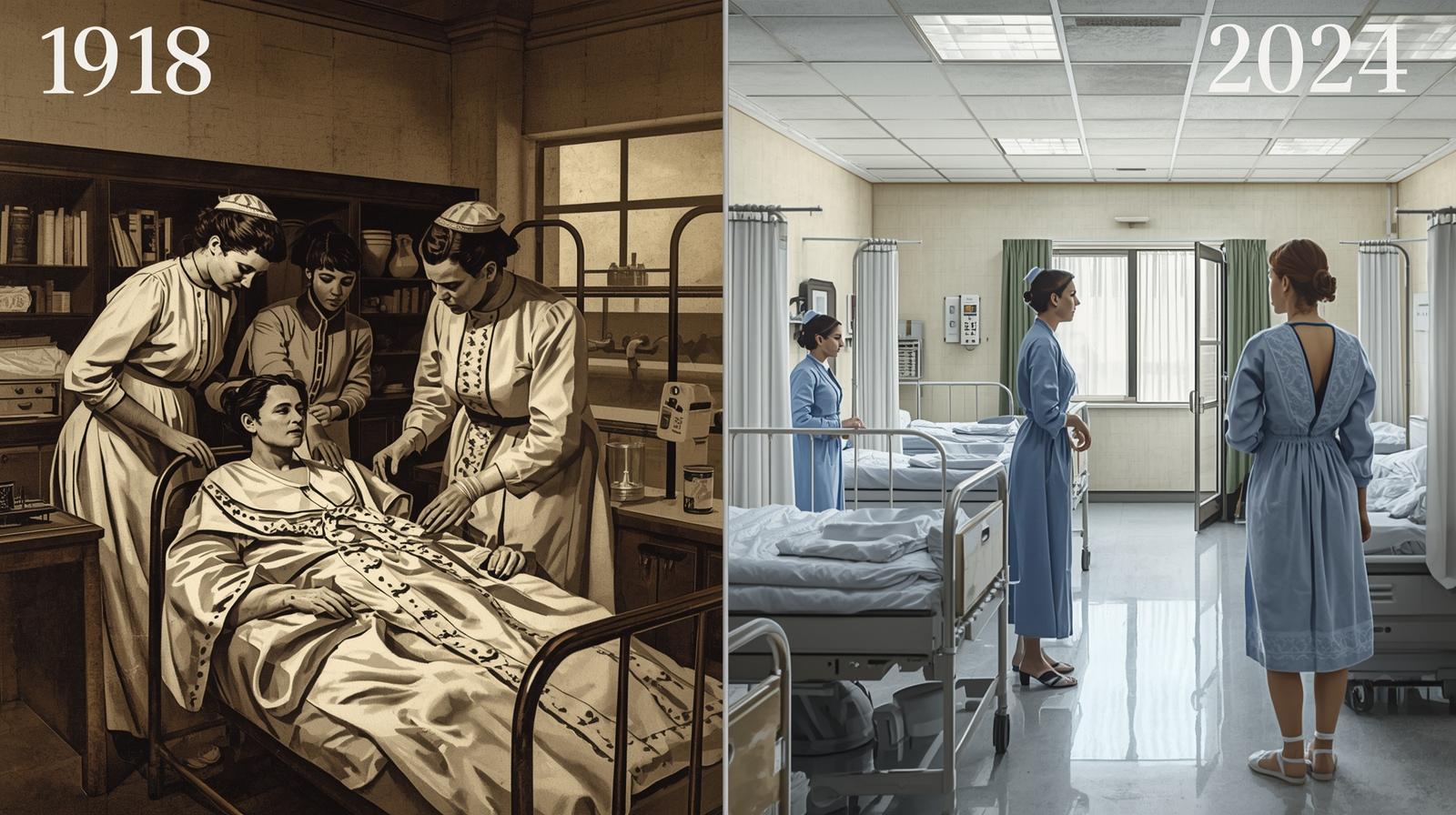
The patient gown evolution shifted rapidly from domestic comfort to institutional utility. Hospitals urgently required standardized patient apparel that could be mass-produced, easily changed on immobile patients, and subjected to rigorous sanitation without falling apart. The open-back “Johnny” gown emerged as the solution to the industrialization of healthcare, designed to serve the system’s need for speed and volume while providing basic coverage.
The Strategic Logic of Hospital Gown Design
It is a common misconception that the split-back style is intended solely to save fabric or laundry costs. In reality, the standard hospital gown design is a strategic response to the physical demands of acute care.
In a clinical environment, a patient’s status can deteriorate in seconds. A garment that requires the patient to sit up, rotate, or lift their arms to remove can become a dangerous obstruction. The open-back architecture ensures that the fabric does not act as a tourniquet or a barrier during resuscitation, line insertion, or defibrillation. For procurement managers, understanding this logic is essential: the gown is designed to be “zero-resistance” clothing, ensuring that the textile never impedes clinical intervention.
The Operational Advantage: Laundry & Inventory Efficiency
For procurement professionals, the value of the open-back gown extends beyond the bedside to the loading dock. The design is a triumph of logistical efficiency, specifically tailored for the rigors of industrial laundry systems.
Why Open-Back Designs Reduce Cost-Per-Wash
Hospitals process tons of linen daily. The open-back structure allows the gown to lay completely flat. This is crucial for passing through high-speed tunnel washers and industrial ironers without jamming machinery or damaging fasteners. Complex closures like zippers or delicate buttons often fail under high-temperature sterilization or can damage the expensive pressing equipment.
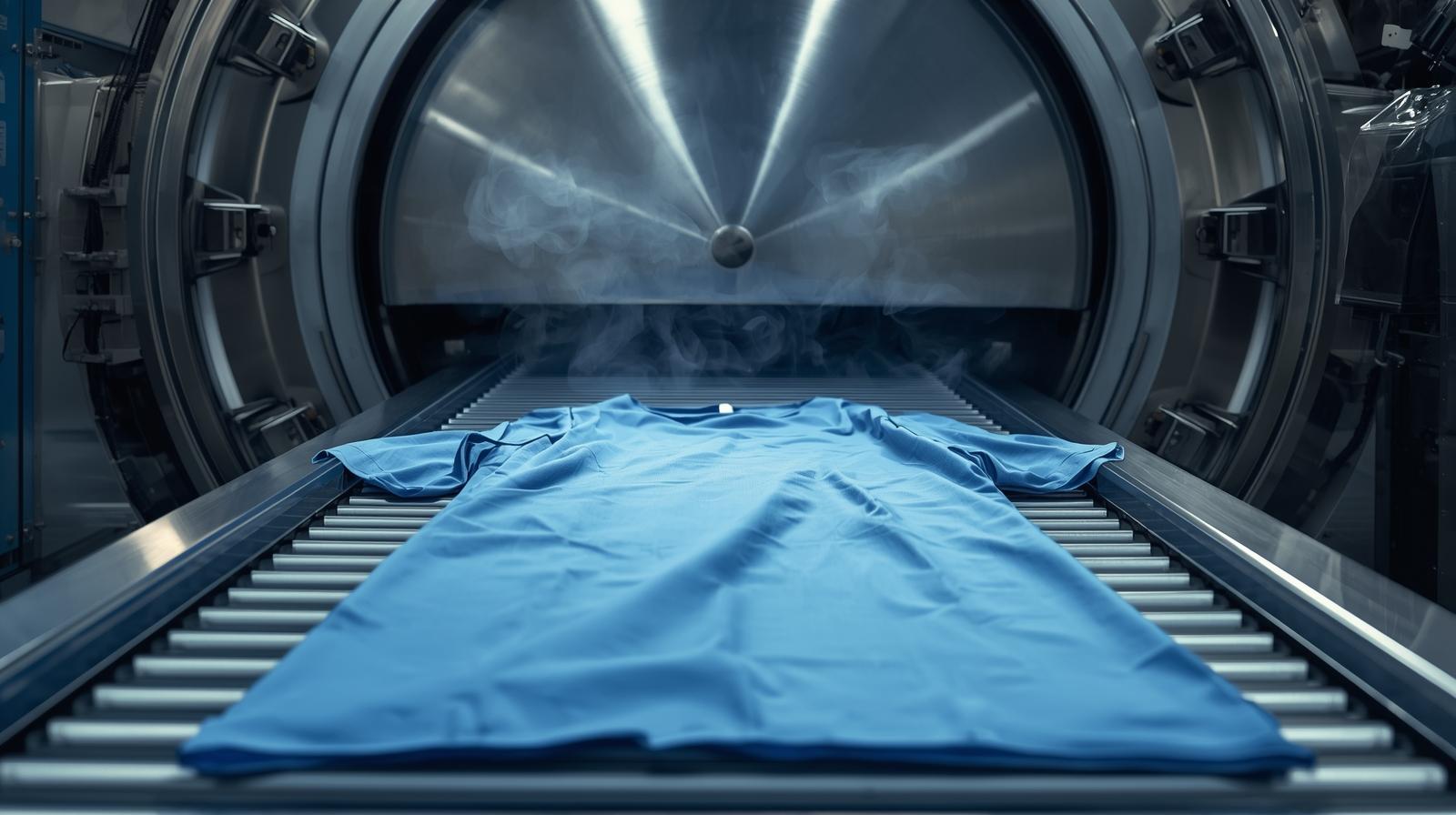
Procurement Value Checklist: Why Open-Back Wins in Logistics
- High-Speed Ironing Compatible: Lays completely flat for tunnel washers and flatwork ironers, increasing throughput by 30%+.
- Reduced Repair Costs: No zippers or complex buttons to crush or melt under high-heat sterilization pressures.
- Universal Fit Inventory: The adjustable “one-size-fits-most” nature of the open back means one SKU can fit up to 90% of adult patients. This drastically relieves the pressure on procurement teams and significantly streamlines the hospital’s overall inventory management process by reducing dead stock and freeing up critical storage space.
- Faster Drying Times: The open structure allows better airflow in tumble dryers compared to closed-back garments.
The simple tie-back design ensures durability and drives cost efficiency by extending the lifespan of each unit. Furthermore, the adjustable nature of the open back creates a “One Size Fits Most” solution. This supports effective hospital linen management by drastically simplifying inventory requirements, allowing hospitals to maintain leaner stock levels while still accommodating a diverse patient demographic.
Choosing the Right Fabric for Your Laundry Capabilities
Once the open-back style is selected, the next critical decision for procurement teams is the material. The right fabric must balance the brutal realities of industrial washing with the need for patient comfort.
Fabric & Material Comparison Guide
| Fabric Type | Comfort & Breathability | Industrial Wash Durability | Procurement Cost |
|---|---|---|---|
| 100% Cotton | High | Low (Prone to shrinking) | Medium |
| Poly-Cotton Blends | Medium | Very High (Longest lifespan) | Low |
| Performance Synthetics | High | High | High |
1. Critical Medical Access for Medical Staff
In emergency rooms and intensive care units, speed is the currency of survival. The primary functional purpose of the open-back gown is to provide immediate, unhindered medical access to the patient’s torso and spine.
For medical staff, particularly nurses and emergency physicians, the gown facilitates rapid assessment. Unlike consumer clothing, which prioritizes fit and style, medical apparel must accommodate telemetry leads, IV lines, catheters, and surgical drains. The open-back design ensures that a nurse can auscultate the lungs, check the skin for pressure ulcers on the sacrum, or manage spinal catheters without requiring the patient to disrobe completely. This accessibility is vital for maintaining an efficient workflow, allowing staff to perform checks swiftly and move to the next patient.
Clinical Scenarios Requiring Mandatory Open-Back Access:
-
Epidural & Spinal Anesthesia: Direct access to the vertebral column without patient repositioning.
-
Code Blue / Defibrillation: Immediate chest exposure for paddle placement and CPR.
-
Telemetry & EKG Monitoring: Unobstructed routing of leads to the chest and abdomen.
-
Skin Integrity Assessments: Daily checks for sacral pressure ulcers (bedsores) in immobile patients.
-
Foley Catheter Management: Easy access for insertion and hygiene care without full disrobing.
Facilitating Surgical Procedures and Physical Exams
The clinical utility of this design becomes indisputable during pre-operative preparations and surgical procedures. Consider a patient with limited mobility, a spinal injury, or severe frailty. Requiring such a patient to maneuver out of a t-shirt or pajama top is not only inefficient but potentially hazardous.
The open-back design allows anesthesiologists to access the spine for epidurals or spinal blocks without removing the garment entirely. It allows surgeons to prep the chest or abdomen while keeping the rest of the body covered to maintain normothermia. In these high-stakes scenarios, the gown acts as a sterile drape that can be manipulated or removed instantly, streamlining the process for the surgical team.
2. Infection Control in Healthcare Settings
Beyond efficiency, the design plays a pivotal role in infection control. In high-risk healthcare settings, the method by which clothing is removed is just as important as the protective gear worn by staff.
When a gown becomes soiled with blood, bodily fluids, or hazardous pathogens, pulling it over the patient’s head presents a significant contamination risk. It can smear contaminants across the patient’s face, eyes, and airway. The open-back design—often paired with break-away ties or snaps—allows the garment to be peeled away from the body and rolled downward. This “off-and-away” motion is a cornerstone of modern biohazard protocols, protecting both the patient and the provider from exposure.
Safety Comparison: Open-Back vs. Consumer-Style Clothing
| Feature | Standard Open-Back Gown | T-Shirt / Consumer Pajamas |
| Removal Method | “Peel-Away” (Downward): Soiled fabric moves away from the face. | “Over-the-Head” (Upward): Soiled fabric drags across eyes, nose, and mouth. |
| IV Line Compatibility | High: Gown removes without disconnecting lines. | Zero: Lines must be disconnected to change clothes (High infection risk). |
| Contamination Risk | Low: Minimal manipulation required. | High: Significant struggle and contact required. |
| Emergency Access | Instant: < 3 seconds to expose chest. | Delayed: Requires cutting or struggling to remove. |
Standards for Infection Prevention and Control in the Hospital Ward
On a busy hospital ward, nurses manage patients with various infectious conditions, from MRSA to C. difficile. Adhering to strict infection prevention and control standards requires minimizing the manipulation of soiled linens.
The open-back gown supports this by allowing for effortless removal even when the patient is bedridden or connected to multiple life-support machines. It eliminates the need to disconnect IVs or threading tubes through sleeves, which is a common breach point for sterility. By simplifying the doffing process, the design reduces the likelihood of cross-contamination, directly contributing to lower hospital-acquired infection (HAI) rates.
Reusable vs. Disposable Gowns: A Purchasing Matrix
For departments facing highly contagious pathogens or navigating mass casualty events, clinical directors must also weigh the benefits of traditional textiles against disposable gowns. Here is how to evaluate the two options based on strict infection protocols and bottom-line costs:
| Evaluation Criteria | Reusable Gowns (Cloth) | Disposable Gowns (Single-Use) |
|---|---|---|
| Infection Control Risk | Low (Requires rigorous sterilization) | Zero (Perfect for strict isolation units) |
| Cost-Per-Use | Low (Amortized over dozens of washes) | High (Recurring inventory expense) |
| Waste Management | Low Environmental Impact | High Disposal & Incineration Fees |
| Best Use Cases | General Ward, Surgery, Maternity | ER, ICU Isolation, Outbreak Scenarios |
3. The Challenge of Patient Experience & Patient Dignity
While the clinical arguments are sound, the industry cannot ignore the psychological impact of this design. Patient experience scores (such as HCAHPS) are increasingly tied to hospital reimbursement, and the “exposure” caused by open-back gowns is a frequent complaint.
For procurement leaders, the challenge lies in sourcing products that do not compromise patient dignity while maintaining clinical utility. A patient who feels exposed is a patient who feels vulnerable and anxious, which can negatively impact recovery outcomes. The market is shifting towards finding a middle ground where efficiency does not come at the cost of the patient’s sense of self.
Balancing Functionality with Privacy in Medical Clothing
The evolution of medical clothing is now focused on “modesty without compromise.” The goal is to retain the critical rear access required by doctors while ensuring the patient feels covered when walking down a hallway or receiving visitors. Procurement teams are increasingly evaluating gowns with wider overlaps (telemetry pockets) or wrap-around styles that secure on the side rather than the back. These designs maintain the necessary access points for staff but close the gap on privacy issues.
How Upgraded Apparel Influences HCAHPS Scores
While premium closures (like snap buttons) carry a higher initial price tag than traditional ties, hospital administrators are increasingly justifying the investment by mapping it directly to hospital reimbursement rates. Here is how upgraded patient apparel provides a measurable return on investment:
- Improved Communication Ratings: When patients are no longer anxious about accidental exposure, they feel more respected and are significantly more likely to communicate openly with nursing staff about their symptoms.
- Higher Overall Hospital Ratings: Comfortable, privacy-protecting gowns are consistently cited by patients as a tangible indicator of a hospital’s “attention to detail” and commitment to premium care.
- Reduced Patient Fall Risk: Properly fitted garments with stable closures eliminate the hazards of dragging fabrics, significantly lowering the risk of tripping or tangled IV lines when a frail patient gets out of bed.
Balancing Functionality with Privacy in Medical Clothing
The evolution of medical clothing is now focused on “modesty without compromise.” The goal is to retain the critical rear access required by doctors while ensuring the patient feels covered when walking down a hallway or receiving visitors. Procurement teams are increasingly evaluating gowns with wider overlaps (telemetry pockets) or wrap-around styles that secure on the side rather than the back. These designs maintain the necessary access points for staff but close the gap on privacy issues.
Innovations in Patient Gowns: Beyond the Open Back
Recognizing these dual needs, manufacturers are innovating. Modern patient gowns are moving away from the simple cotton tie-back to more sophisticated textiles and closure systems. These innovations are designed to serve the hybrid needs of the modern hospital: high-tech medical care delivered with a hospitality mindset.
Adopting User-Centered Design in Modern Apparel
Recognizing that healing is both physical and psychological, forward-thinking medical manufacturers are shifting their mindset. By adopting user centered design, the industry is ensuring that the medical clothing of the future is crafted just as much for the patient’s emotional comfort as it is for the physician’s convenience.
Introducing Modern Fasteners: Velcro, Snaps, and Magnetic Closures
Two of the most significant advancements in gown technology rely on replacing traditional strings with innovative fasteners, such as velcro (hook-and-loop) and magnetic closures.
- Plastic Snaps/Velcro: These snap closures allow the gown to be fully closed along the shoulders and back, providing 100% complete coverage and privacy protection. Crucially, in a medical emergency, these secure snaps can still be ripped open in a single second (“break-away” function) to restore instant, life-saving access.
- Magnetic Closures: Often found in premium “concierge” lines or maternity wards, magnets offer a seamless, self-closing experience that mimics high-end clothing.
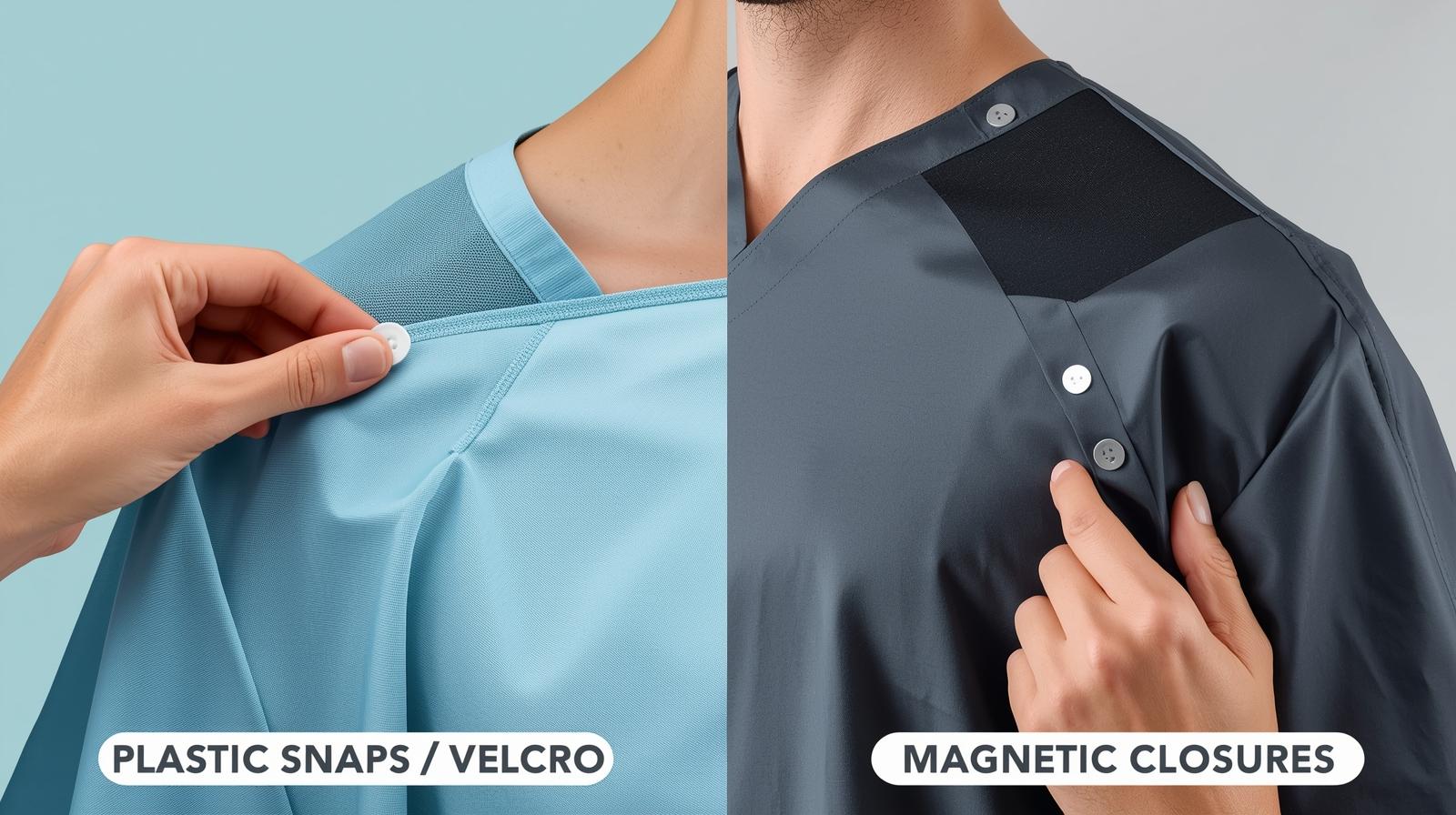
Buyer’s Guide: Comparing Gown Closure Systems
| Closure Type | Pros (Benefits) | Cons (Limitations) | Best For |
| Traditional Ties | Lowest cost; Most durable in laundry; MRI safe. | Hard for patients to tie themselves; Back exposure risk. | ER, ICU, Surgery, General Ward |
| Plastic Snaps | Full back coverage; MRI safe; “Break-away” capable. | Can be uncomfortable to lie on; Higher cost than ties. | Orthopedics, Rehab, Maternity |
| Velcro (Hook & Loop) | Easy self-dressing; Adjustable fit. | Collects lint in laundry; Can scratch skin; Degrades over time. | Outpatient, Short-stay |
| Magnetic Closures | Premium experience; Self-closing; Highest dignity. | NOT MRI Safe; Expensive; Heavy laundry care required. | VIP Suites, Concierge Medicine |
Department-Specific Purchasing Checklist
Because a major healthcare network encompasses diverse clinical needs, a “one-size-fits-all” approach to closures doesn’t always work. Here is a practical cheat sheet for matching the right gown closure to the specific needs of your departments:
- For Emergency & ICU: Prioritize rapid medical access and life-saving efficiency. 👉 Recommendation: Traditional ties or plastic snap closures with a “break-away” function.
- For Orthopedics & Rehabilitation: Prioritize ease of movement for patients with limited mobility. 👉 Recommendation: Side-tie designs or Velcro closures that allow for easy, twist-free dressing.
- For Maternity & VIP Suites: Prioritize patient dignity and a premium hospitality experience. 👉 Recommendation: Fully-closed magnetic closures or heavy-weight, extended-length fabrics.
FAQs About Open Back Hospital Gowns
Q1: Why do hospital gowns open in the back?
The primary reason is to allow medical staff quick access to the spine and back for examinations, injections, or anesthesia without requiring the patient to stand or move significantly. It also facilitates easy removal in emergencies.
Q2: Can patients wear their own clothes instead of open-back gowns?
In some low-risk units, yes. However, for surgery, ICU, or cardiac monitoring, open back hospital gowns are mandatory to ensure that IV lines, catheters, and electrodes can be managed without obstruction.
Q3: How do open-back gowns improve safety?
They allow for “downward removal,” meaning soiled gowns are peeled away from the body rather than pulled over the head, which significantly reduces the risk of spreading infection to the face or airway.
Q4: Are there alternatives that offer more privacy?
Yes. Many hospitals are now adopting gowns with side-ties, snaps, or wrap-around designs that offer full back coverage while still allowing doctors to access the back when necessary.
References:
-
Centers for Disease Control and Prevention (CDC). “Sequence for Putting On and Removing Personal Protective Equipment (PPE).”
-
Agency for Healthcare Research and Quality (AHRQ). “HCAHPS: Patients’ Perspectives of Care Survey.”
-
Association for the Advancement of Medical Instrumentation (AAMI). “ANSI/AAMI PB70: Liquid barrier performance and classification of protective apparel and drapes.”


