


Understanding ASTM F1670 and F1671 is crucial for healthcare safety, especially when considering why the ASTM F1670 vs F1671 debate matters when synthetic blood tests fail to protect staff. These standards help shield you from exposure to blood and bodily fluids. Studies show that the average annual incidence rate of occupational exposure among healthcare workers is approximately 39.90 per 1000 person-years. In 2019, this rate peaked at 60.38 per 1000 person-years. Furthermore, the CDC estimates nearly 400,000 needlestick injuries occur in hospitals each year. With these alarming figures, clarity in these standards becomes essential to ensure your safety and well-being in healthcare settings.
Key Takeaways
ASTM F1670 tests protective clothing against synthetic blood, while ASTM F1671 focuses on bloodborne pathogens. Understanding this difference is crucial for your safety.
Wearing ASTM F1670-compliant gear reduces your risk of exposure to synthetic blood, which can carry harmful pathogens. Always prioritize protective clothing that meets this standard.
ASTM F1671 ensures your protective clothing can withstand exposure to infectious materials. This significantly lowers your risk of infection from bloodborne pathogens.
Inadequate protective measures can lead to serious health risks, including needlestick injuries. Always check your PPE for compliance with ASTM standards.
Investing in proper PPE not only protects healthcare workers but also leads to lower infection rates and cost savings for healthcare facilities.
ASTM F1670 Overview
Testing Methodology
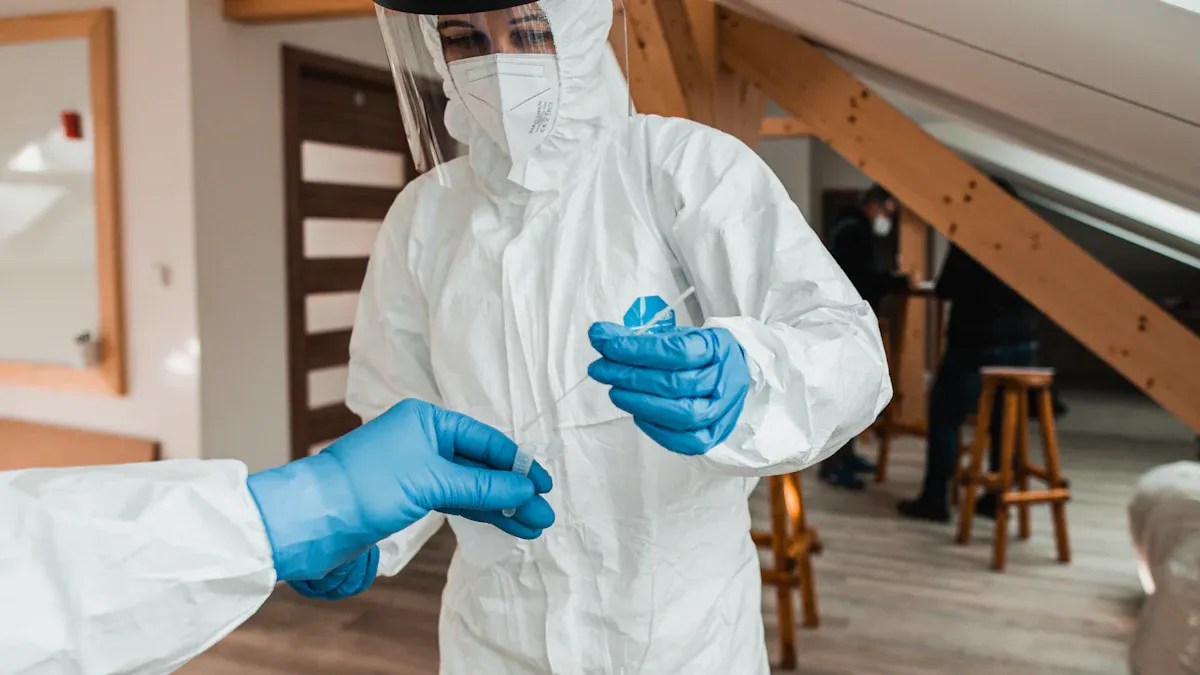
ASTM F1670/F1670M-25 defines the Standard Test Method for Resistance of Materials Used in Protective Clothing to Penetration by Synthetic Blood. This method evaluates how well protective clothing materials resist synthetic blood penetration. The testing process simulates real-world exposure by using a synthetic blood mixture that mimics the surface tension and viscosity of actual blood.
Here’s a summary of the key aspects of the ASTM F1670 testing methodology:
Aspect | Details |
|---|---|
Standard | ASTM |
Method | ASTM F 1670/1670 M |
Title | Resistance of Materials Used in Protective Clothing to Penetration by Synthetic Blood |
Scope | Evaluates resistance of materials to synthetic blood penetration under continuous liquid contact. |
Pass/Fail Determination | Based on visual detection of synthetic blood penetration. |
Test Conditions | Specimen subjected to synthetic blood for a specified time and pressure. |
Failure Criteria | Any evidence of synthetic blood penetration constitutes failure. |
Significance | Used to evaluate protective clothing materials against blood-borne pathogens. |
Limitations | Not effective for materials with thick inner liners that absorb synthetic blood. |
Related Method | Based on Test Method F903 for measuring resistance to penetration by liquids. |
The synthetic blood used in the test has a surface tension of approximately 0.042 ± 0.002 N/m, which aligns with actual blood and body fluids. This adjustment helps simulate the wetting characteristics of blood, essential for evaluating the effectiveness of protective clothing.
Importance for Healthcare Workers
You rely on ASTM F1670-compliant protective clothing to ensure your safety in healthcare settings. This standard helps you avoid exposure to synthetic blood, which can carry harmful pathogens. By wearing garments that meet ASTM F1670, you significantly reduce your risk of infection from bloodborne pathogens.
Healthcare workers need reliable protective clothing to maintain safety during procedures. When you wear compliant gear, you create a barrier against potential hazards. This protection is vital, especially in environments where exposure to blood and bodily fluids is common.
ASTM F1671 Overview
Testing Methodology
ASTM F1671/F1671M-13 defines the Standard Test Method for Resistance of Materials Used in Protective Clothing to Penetration by Bloodborne Pathogens. This standard specifically targets bloodborne pathogens, ensuring that protective clothing can withstand exposure to infectious materials. The testing methodology uses Phi-X 174 bacteriophage as the challenge agent. This bacteriophage helps evaluate how well materials resist penetration by simulating real-world conditions.
Here’s a summary of the key aspects of the ASTM F1671 testing methodology:
Aspect | Details |
|---|---|
Standard | ASTM |
Method | ASTM F 1671/1671 M |
Title | Resistance of Materials Used in Protective Clothing to Penetration by Bloodborne Pathogens |
Scope | Evaluates resistance of materials to bloodborne pathogens under continuous liquid contact. |
Pass/Fail Determination | Based on visual detection of penetration by the challenge agent. |
Test Conditions | Specimen subjected to the bacteriophage for a specified time and pressure. |
Failure Criteria | Any evidence of penetration constitutes failure. |
Importance for Healthcare Workers
You depend on ASTM F1671-compliant protective clothing to safeguard yourself against bloodborne pathogens. This standard addresses several primary safety concerns for healthcare workers, including:
Risks to the integrity of personal protective equipment (PPE) due to manufacturing defects and environmental hazards.
Potential contamination breaches during the donning and doffing process, especially in high-risk situations.
The necessity of protocols to guide you in safely managing breaches and ensuring your own safety.
While ASTM F1671 provides essential guidelines, laboratory studies show mixed results regarding gown effectiveness in preventing exposure to bloodborne pathogens. The bacteriophage used may not accurately represent the penetration properties of all viruses, such as Ebola. Understanding these limitations helps you make informed decisions about your protective gear.
By wearing clothing that meets ASTM F1671 standards, you significantly reduce your risk of infection. This protection is vital in environments where exposure to blood and bodily fluids is common.
Key Differences and Implications
Why Does the ASTM F1670 vs F1671 Debate Matter When Synthetic Blood Tests Fail to Protect Staff?
The differences between ASTM F1670 and ASTM F1671 are significant. ASTM F1670 focuses on resistance to synthetic blood penetration, while ASTM F1671 targets bloodborne pathogens. This distinction matters greatly for your safety as a healthcare worker. When synthetic blood tests fail to protect staff, the consequences can be dire.
You must understand that ASTM F1670 evaluates how well materials resist synthetic blood, which simulates real-world exposure. However, it does not account for the specific risks posed by infectious agents. On the other hand, ASTM F1671 uses a bacteriophage to assess resistance to bloodborne pathogens. This means that while ASTM F1670 may indicate a material’s ability to resist liquid penetration, it does not guarantee protection against actual pathogens.
Inadequate protection can lead to serious health risks. Consider the following documented consequences of insufficient protective measures:
Needlestick injuries (NSIs) pose a significant risk, leading to the transmission of serious infectious diseases such as hepatitis B, hepatitis C, and HIV.
The US Occupational Health and Safety Administration (OSHA) estimates that 5.6 million healthcare workers are at risk of exposure to bloodborne pathogens due to NSIs.
A study in Saudi Arabia found an annual sharp injury rate of 3.2 per 100 occupied beds, with nurses being the most affected group.
The chance of infection after a needlestick injury from a needle contaminated with HBV ranges from 6% to 30%, while the risk for HCV is 1.8% and for HIV is 0.3%.
These statistics highlight the urgent need for effective protective clothing. You cannot afford to overlook the implications of these standards.
Consequences of Inadequate Protection
The consequences of inadequate protection extend beyond immediate health risks. They can also have financial implications for healthcare facilities. Investing in proper personal protective equipment (PPE) yields strong returns in health and future cost savings. For instance, infection rates are 28 times lower in conditions with adequate access to necessary PPE.
Here’s a summary of the financial and health impacts of inadequate protective clothing in healthcare settings:
Evidence Type | Description |
|---|---|
Infection Rates | Infection rates are 28 times lower in conditions with adequate access to necessary PPE. |
Financial Impact | Investments in PPE yield strong returns in health and future cost-savings. |
Health Worker Safety | 507 healthcare workers died during the Ebola outbreak due to inadequate protective measures. |
In Zambian healthcare settings, the risk of bloodborne pathogen exposure is heightened due to the high prevalence of these pathogens in the population. This indicates a serious occupational risk that you must consider when selecting protective clothing.
Understanding the differences between ASTM F1670 and ASTM F1671 is essential for your safety. The ASTM F1670 vs F1671 debate matters because it directly impacts your protection against bloodborne pathogens and synthetic blood exposure. You deserve to work in an environment where your safety is prioritized, and knowing these standards helps you advocate for better protective measures.
Real-World Applications
Impact on Healthcare Practices
The ASTM F1670 and F1671 standards significantly influence daily healthcare practices. These standards guide the selection and use of personal protective equipment (PPE) in various healthcare settings. Understanding these standards helps you make informed decisions about the protective clothing you wear.
Here’s a summary of how these standards impact healthcare practices:
Standard | Purpose | Testing Methodology |
|---|---|---|
ASTM F1670 | Tests resistance of materials in protective clothing to synthetic blood | Measures penetration at 2psi under ambient pressure |
ASTM F1671 | Tests resistance of protective clothing to bloodborne pathogens | Measures viral penetration at 2psi and ambient pressure |
You need to recognize that compliance with these standards is not just about meeting regulations. It directly affects your safety and the safety of your patients. When healthcare facilities prioritize ASTM F1670 and F1671 compliance, they create a safer environment for everyone involved.
Case Studies and Examples
Real-world incidents highlight the importance of adhering to these standards. For instance, the 2014 Ebola Virus outbreak revealed the risks healthcare workers face when protective measures fall short. Nurses treating Ebola patients contracted the virus due to inadequate PPE. This incident underscored the need for strict compliance with ASTM standards to protect healthcare workers from exposure to infectious diseases.
Similarly, the COVID-19 pandemic exposed vulnerabilities in healthcare systems. A lack of adequate PPE not only endangered healthcare workers but also destabilized healthcare systems. Increased demand for care coincided with reduced capacity, leading to a crisis. These situations emphasize why the ASTM F1670 vs F1671 debate matters when synthetic blood tests fail to protect staff.
Healthcare workers express specific needs regarding PPE. They require gear that provides full protection against droplets and aerosols. However, current specifications often overlook factors like air permeability and moisture vapor transmission. This oversight can lead to discomfort and reduced willingness to use protective clothing. Involving healthcare workers in comfort testing can enhance the acceptability of PPE, addressing the “human-comfort-factor” that influences their choices.
By learning from past incidents and actively engaging healthcare workers in the selection process, facilities can improve compliance with ASTM standards. This proactive approach ensures that you have the necessary protection against bloodborne pathogens and synthetic blood exposure.
Selecting the right ASTM standard is vital for your safety in healthcare. Misunderstanding these standards can lead to serious consequences. For example, inadequate compliance with ASTM F1670 and F1671 can expose you to pathogens, increasing your risk of infection.
Consider these long-term implications of choosing the wrong standard:
Workforce attrition: Increased infection rates can lead to shortages in healthcare workers.
Infrastructure challenges: Shortages disrupt operations and hinder long-term solutions.
Changes in care delivery: Lack of PPE may force reliance on telemedicine.
To ensure compliance, stay aware of relevant standards and receive proper training on PPE use. By prioritizing these practices, you protect yourself and your patients effectively.
Standard | Description | Implication for Healthcare Workers |
|---|---|---|
ASTM F1670 | Evaluates resistance to blood penetration | Inadequate compliance can lead to exposure to pathogens. |
ASTM F1671 | Tests resistance to bloodborne pathogens | Non-compliance increases risk of infection for healthcare workers. |
By understanding and applying these standards, you contribute to a safer healthcare environment.
FAQ
What is the main difference between ASTM F1670 and ASTM F1671?
ASTM F1670 tests resistance to synthetic blood penetration. ASTM F1671 focuses on resistance to bloodborne pathogens. Understanding this difference helps you choose the right protective clothing.
Why is ASTM F1671 important for healthcare workers?
ASTM F1671 ensures that your protective clothing can withstand exposure to infectious materials. This standard helps reduce your risk of infection from bloodborne pathogens.
How can I ensure my protective clothing meets these standards?
Check for labels indicating compliance with ASTM F1670 or ASTM F1671. Always choose PPE from reputable manufacturers who adhere to these standards.
What should I do if I suspect my PPE is inadequate?
If you suspect your PPE does not meet the required standards, report it to your supervisor immediately. Seek replacement gear that complies with ASTM standards to ensure your safety.
Are there any limitations to these standards?
Yes, both standards have limitations. ASTM F1670 may not account for all pathogens, while ASTM F1671 uses a bacteriophage that may not represent all viruses. Always stay informed about the latest research and guidelines.


